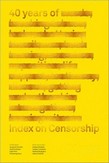
Index on Censorship hits 40 with a special anniversary issue featuring its finest contributors. From celebrated Russian author Mikhail Bulgakov's diary to Chinese activist Chen Wei's online essay, the medium may have changed over four decades, but the message remains the same - as do the methods for silencing writers, whistleblowers, artists and protesters. Index examines the challenges for free speech today, looks back at the watersheds since 1972 and asks leading activists, journalists and writers around the world for their manifestos for a more outspoken world. Index on Censorship is an award-winning magazine, devoted to protecting and promoting free expression. International in outlook, outspoken in comment, Index on Censorship reports on free expression violations around the world, publishes banned writing and shines a light on vital free expression issues through original, challenging and intelligent commentary and analysis, publishing some of the world's finest writers. Winner 2008 Amnesty International Consumer Magazine of the Year
Is transparency bad for science? As leading scientists question the use and abuse of freedom of information, Index looks at the data wars and the limits of scientific debate. Richard Smith calls for open access; veteran whistleblower Peter Wilmshurst questions a culture of silence; Michael Blastland considers our fear of uncertainty; Sam Geall looks at environmental cover-ups in China and Tracey Brown explains why law can be bad for your health. Index on Censorship is an award-winning magazine, devoted to protecting and promoting free expression. International in outlook, outspoken in comment, Index on Censorship reports on free expression violations around the world, publishes banned writing and shines a light on vital free expression issues through original, challenging and intelligent commentary and analysis, publishing some of the world's finest writers. Winner 2008 Amnesty International Consumer Magazine of the Year
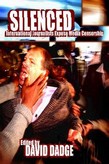
What happens to journalists who expose uncomfortable truths? How far are journalists prepared to go in order to report a difficult story? This work provides answers to these questions with the stories of journalists who risked their careers so that the public might be informed. It aims to be a reminder of risks accepted by the media on our behalf.
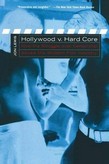
How the Struggle Over Censorship Created the Modern Film Industry
An intriguing look at how the American film industry imposed the rating system upon itself to control competition from films independently produced and distributed.
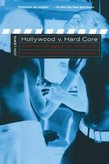
How the Struggle Over Censorship Created the Modern Film Industry
An intriguing look at how the American film industry imposed the rating system upon itself to control competition from films independently produced and distributed.
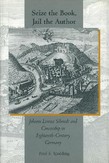
Johann Lorenz Schmidt and Censorship in Eighteenth-century Germany
Under the patronage of two south German nobles, Johann Lorenz Schmidt published an annotated translation of the Bible's opening books in 1735. The story of the controversy the work aroused and of its eventual suppression sheds light on many aspects of the eighteenth century, as well as the nature of censorship in our time.
Press stories portray the Internet as full of pornography, paedophilia, bomb-making recipes, lewd and lawless behaviour, and copyright violation, but some people argue that such reports greatly overstate the case. This book assesses the issues which will affect the future of the Internet.
This study of the censorship of James Joyce's Ulysses is largely based on research of such archives as US Post Office and Department of Justice records, and interviews of descendants of US Attorneys Sam Coleman and Nicholas Atlas. Vanderham (English, The King's U. College) argues for a close connec