The Impact of Interpersonal Communication and Mass Media
Recent research in the area of public opinion has focused most of its attention on the effect of the mass media, television in particular, as an influencing agent. The author argues that media effects are only half of the equation; the mass media cannot be seen as the exclusive source of political information. In a model of `total information flow', the media must share the political information environment with interpersonal communication. This volume bridges the gap between media and interpersonal communication and their combined effect on political attitudes and cognition.
The Impact of Interpersonal Communication and Mass Media
Recent research in the area of public opinion has focused most of its attention on the effect of the mass media, television in particular, as an influencing agent. The author argues that media effects are only half of the equation; the mass media cannot be seen as the exclusive source of political information. In a model of `total information flow', the media must share the political information environment with interpersonal communication. This volume bridges the gap between media and interpersonal communication and their combined effect on political attitudes and cognition.
This study aims to provide a critical introduction to the relations between gender, media and culture. Feminists have long recognized the significance of the media as a site for the expression of - or challenges to - existing gender relations. This broad-ranging analysis explores the ways in which feminist theory and feminist research contribute to a fuller understanding of the multiple roles of the media in the construction of gender in contemporary societies. The text intially outlines some major themes in feminist media studies and the ways in which they offer specific models for understanding the media. It goes on to examine key questions posed by a gender approach within communication and cultural studies. Other issues explored include: theories of transmission, representation, construction and discourse; structure of media organization and production; interpreting media representation though content analysis and semiotics; contradictions of the gendered image as spectacle; new approaches to understanding the audience and the politics of media reception; and the potential of feminist and interpretive researtch strategies. Providing a synthesis of theoretical and empirical work, this book should be of interest to students of communications, cultural studies and women's studies.
Brings together a group of journalists to examine the media's role in shaping contemporary American society. The authors, including NBC anchor Tom Brokaw, Tom Wicker and Diane Sawyer, draw on their experience to examine such issues as censorship, media libel and reporting in wartime.
''The best book I've read on women in broadcasting. . . . It details the incredible struggle women have faced in what some consider a leadership industry.'' -- Larry King, USA Today ''This is a groundbreaking first history of the 'underground' women's movement at the networks. It is told with no holds barred by a leader of that struggle, which is ......
Each volume of The International Library of Law and Legal Theory brings together important essays of central theoretical importance in its subject area, for researchers, teachers, and students of law. The Areas section of the series takes in the main branches of law with an emphasis on essays which
How we think about health problems, and what we do about them, is largely determined by how they are reported on television, radio and in the newspapers. Often, crucial issues of public health policy are debated and decided on only after they are made visible by the media. The concept of media advocacy as a central strategy for the prevention of public health problems is discussed in this unique book. Traditional communication strategies like social marketing focus on giving people a message; media advocacy gives people a voice. The book lays out the theoretical framework and practical guidelines to successful media advocacy strategies and includes case studies on such vital issues as AIDS and alcohol abuse.
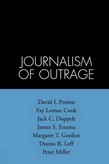
Investigative Reporting and Agenda Building in America
This book is the first systematic study of investigative reporting in the post-Watergate era. The authors examine the historical roots, contemporary nature, and societal impact of this controversial form of reporting, which they call "the journalism of outrage." Contrary to the conventional wisdom that depicts muckrakers and policymakers as ......
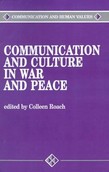
By exploring the role of both culture and the mass media, this volume fills a gap in the literature on war and peace. Outstanding scholars provide an overview of critical mass media research and open up entirely new perspectives on the ongoing debate over communications issues in war and peace. The contributions bring together common themes including the military-industrial-communications complex, cultural imperialism and transnational control of communications. Various perspectives are covered, such as gender issues, language study and bureaucratization.