Praise for the First Edition: `I can't think of a book in media studies that handles so well the diversity of perspectives and issues that Stevenson addresses. Whether reconstructing Marxism or deconstructing postmodernism, tackling the pleasures of soap opera or the repetitive structures of daily news presentation, Stevenson is always clear and insightful' - Sociology The Second Edition of this book provides a comprehensive overview of the ways in which social theory has attempted to theorize the importance of the media in contemporary society. Now fully revised to take account of the recent theoretical developments associated with `new media' and `information society', as well as the audience and the public sphere, Understanding Media Cultures: - Critically examines the key social theories of mass communication - Highlights the work of individual theorists including Fiske, Williams, Hall, Habermas, Jameson, McLuhan and Baudrillard. - Covers the important traditions of media analysis from feminism, cultural studies and audience research. - Now includes a discussion of recent perspectives developed by Castells, Haraway, Virilio and Schiller. - Provides a glossary of key terms in media and social theory. Retaining all the strengths of the previous edition, Understanding Media Cultures offers a comprehensive and up-to-date overview of the field. It will be essential reading for students of social theory, media and cultural studies.
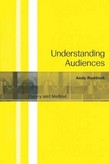
The history of audience research tells us that the relationship between the media and viewers, readers and listeners is complex and requires multiple methods of analysis. In Understanding Audiences, Andy Ruddock introduces students to the range of quantitative and qualitative methods and invites his readers to consider the merits of both. ......
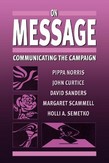
To what extent are the techniques of campaigning and media management critical to the outcome of modern elections? This book brings together a group of leading scholars to provide a comprehensive analysis of the role and impact of political communications during election campaigns. They set the context of election campaigning in Britain, and the ......
Picking up on some of the themes developed in his critically acclaimed book Understanding Audiences (SAGE, 2000), this new book on audience research focuses on qualitative methods and will draw upon students' own media experience. The book is divided into chapters that deal with audience research in terms of concepts and topics. Regarding concepts, Investigating Audiences is firmly grounded within interpretive approaches to studying viewers, readers and listeners. Further to this, the book looks at the different ways in which media influence can be accessed and the attendant methodological consequences. These issues are then applied to a survey of recent scholarship on a variety of topics such as violence, pornography, video gaming, and children and advertising. Investigating Audiences will be very useful for undergraduates in media studies/mass communications courses containing qualitative research components and dealing with cultural studies themes and approaches to audience studies.
How are the perceptions of the majority culture, the `preferred readings', reflected in television news? How do they reinforce stereotyped attitudes on race? This interpretive analysis presents evidence of racism, including under-representation, within news texts. The author examines the values, traditions and practices of news production that, often unconsciously, serve to maintain the alienation of racial groups in society. While the focus is on local television news in the United States, Race, Myth and the News has a broad relevance to studies of culture and race.
Bringing together a range of renowned scholars in the field, this book examines eighteen key issues within contemporary media studies. Written in an accessible student-friendly style, Media Studies - Key Issues and Debates is an authoritative landmark text for undergraduate students. Each individual chapter begins with a concise definition of the concept(s) under investigation. This is followed by a 5,000 word discussion on the current state of play within research on the specific area. Chapters contain case-studies and illustrative materials from Europe, North America, Australasia and beyond. Each chapter concludes with annotated notes, which guide the student-reader in terms of future study. With a preface by Denis McQuail, contributors include Janet McCabe, John Corner, David Croteau, William Hoynes, Natalie Fenton, Jenny Kitzinger, Jeroen de Kloet, Liesbet van Zoonen, Sonia Livingstone and Greg Philo.
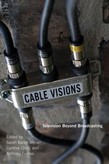
Looks beyond broadcasting's mainstream, toward cable's alternatives, to critically consider the capacity of commercial media to serve the public interest. This work offers an overview of the industry's history and regulatory trends, case studies of cable newcomers aimed at niche markets, and analyses of programming forms introduced by cable TV.
Looks beyond broadcasting's mainstream, toward cable's alternatives, to critically consider the capacity of commercial media to serve the public interest. This work offers an overview of the industry's history and regulatory trends, case studies of cable newcomers aimed at niche markets, and analyses of programming forms introduced by cable TV.
"Media Violence and Aggression is a thoughtful and sophisticated work that dismantles the core assumptions of the media violence hypothesis piece by piece...This book makes several core contributions to the discussion on media violence effects above those seen in other critical works." -Christopher J. Ferguson, PsycCRITIQUES The authors of Media Violence and Aggression: Science and Ideology, Tom Grimes, James A. Anderson, and Lori Bergen, are determined to leave no stone unturned, no perspectives unexplored, no names left unnamed of those in the field with whom, on both empirical and theoretical grounds, they strenuously disagree. It is an engaging book that needed to be and is up close and personal. In so doing, they have produced what may be the most comprehensive critique and rebuttal to date of the omnipresent media-violence and aggression argument." -JOURNAL OF MEDIA PSYCHOLOGY Media Violence and Aggression: Science and Ideology provides a multimethod critique of the media violence/social aggression myth. It provides policy makers and students with information to understand why the violence/media aggression hypothesis does not explain or predict how most people react to what they see and hear in the media. Authors Tom Grimes, James A. Anderson, and Lori Bergen take the reader through a history of media effects research, pointing out where that research has made claims that go beyond empirical evidence. Key Features Dispels the media violence/social aggression myth: Through a multiple method analysis of the myth, the authors provide empirical evidence for their decoupling of media violence from social aggression. Illustrates how much of the media violence/social aggression equation derives from ideology: Taking a different perspective from most other books on media violence, this text shows how very easy-how almost imperceptible-it is to adopt an ideological perspective. Shows how the media violence/social aggression hypothesis conflicts with a range of established social science theory: The book examines why theories generated by media violence/social aggression advocates aren't compatible with other social science theories that explain human behavior (and why they must be compatible in order to achieve validity). Considers media effects for the general population and psychologically unwell people: The book explains that the clinical population's reactions to media violence are often improperly presumed to be the reaction of the general, psychologically well population. Argues that certain science practitioners view children as more psychologically vulnerable to media violence than they actually are: Children are surely more vulnerable to many social and environmental influences than adults, but the degree of media vulnerability is often overstated. Speaks directly to policy makers: This book helps policy makers sort through both the nature of the evidence they are presented with and the risks that such evidence poses to the public. Intended Audience This is an ideal text for graduate courses such as Mass Communication Theory, Media and Society, Media Effects, and Research Methods in Media in the departments of communication, media studies, journalism, sociology, cultural studies, and political science. It is also vital reading for scholars, researcher, and policy makers interested in media effects.