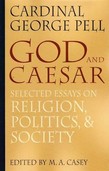
Many of the great questions of our day once again revolve around religion. The secular era of the past two centuries is ending in incomprehension and denial, overwhelmed by the cultural uncertainty and political conflict that have dominated the first years of the new millennium. In the face of developments such as the fall in birth rates and the ......
Catholicism Since 1950 in the United States, Ireland, and Quebec
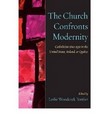
The Chruch Confronts Modernity assesses the history of Roman Catholicism since 1950 in the United States, the Republic of Ireland, and the Canadian province of Quebec. All three locales in 1950, despite very real differences in terms of economics, politics, and demography, were characterized by an institutionally vibrant Catholicism. Attendance at ......
The Deeds of Pope Innocent III, composed before 1210 by an anonymous member of the papal curia, provides a unique window into the activities, policies, and strategies of the papacy and the curia during one of the most important periods in the history of the medieval church. Innocent III, who became pope in 1198 and reigned until 1216, has long ......
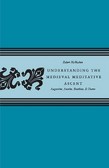
The Confessions, Proslogion, and Consolation of Philosophy, like the Divine Comedy, all enact Platonist ascents. Each has a pilgrim figure, guided dialogically on a journey of understanding. Each rises to progressively higher levels of understanding and culminates in a supreme intellectual vision. The higher levels contain and surpass earlier ......
Evidence of Montanism in the Passion of Perpetua and Felicitas
"The Passion of Perpetua and Felicitas," a precious document from the early church, reported the imprisonment and martyrdom of six Carthaginian Christians in 203. Imbedded in this work is the personal diary of Perpetua, which is the earliest extant writing known to be penned by a Christian woman. A beatific vision recorded by her teacher, Saturus, ......
At the dawn of the second millennium, authors from monasteries in Burgundy and northern Germany recorded the lives and deaths of two powerful and pious women, Mathilda (d. 968) and Adelheid (d. 999). Both were extolled as saints, exemplary figures guided by God and witnessing to His grace. Unlike most other holy women, however, Mathilda and ......
Agnellus' ""Book of Pontiffs of the Church of Ravenna"", written in the ninth century, is a source for the study of Italian history from the fourth to the ninth centuries. Agnellus seems to have been a well-born priest in the church of Ravenna, and his work is strongly coloured by his personal experiences. He wrote the book to demonstrate two ......