What Neuroscience Reveals about the Compulsion to Believe
Does neuroscience have anything to say about religious belief or the existence of God? Some have tried to answer this question, but, in doing so, most have strayed from the scientific method. In The Phantom God, computational biologist and neuroscientist John C. Wathey, Ph.D., tackles this problem head-on, exploring religious feelings not as ......
What did pain and illness mean to early Christians? And how did their approaches to health care compare to those of the ancient Greco-Roman world? In this wide-ranging interdisciplinary study, Helen Rhee examines how early Christians viewed illness, pain, and health care and how their perspective was influenced both by Judeo-Christian tradition ......
Religious belief is often perceived as being in conflict with science-but does it have to be? Not usually, says Joseph Vukov. In this short, accessible guide, Vukov advances three models for Christians to utilise when navigating the relationship between science and faith: conflict, independence, and dialogue. He argues that dialogue is the ......
Explores the Christian Right's fierce opposition to science, explaining how and why its leaders came to see scientific truths as their enemy For decades, the Christian Right's high-profile clashes with science have made national headlines. From attempts to insert intelligent design creationism into public schools to climate change denial, ......
In March 1997, thirty-nine people in Rancho Santa Fe, California, ritually terminated their lives. To outsiders, it was a mass suicide. To insiders, it was a graduation. The author explores the question of why the members of Heaven's Gate committed ritual suicides, and examines the origin and evolution of the religion, its appeal, and practices.
Treating the traditional God concept, as conventionally presented in the Judeo-Christian and Islamic traditions, like any other scientific hypothesis, this title examines the claims made for Gods existence. It considers the Intelligent Design arguments as evidence of Gods influence in biology.
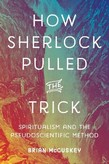
A masterful combination of literary study and author biography, How Sherlock Pulled the Trick guides us through the parallel careers of two inseparable men: Sherlock Holmes and his creator, Sir Arthur Conan Doyle.
Features essays that explore how both faith traditions have approached the interface between science and religion and focuses on the ongoing challenges posed by this issue. This title illuminates the scriptures, the ideas of key religious thinkers, and also the legacy of Charles Darwin.