The book looks at how religion in Singapore is being subjected to the processes of modernisation and change. The Singapore State has consciously brought religion under its guidance. It has exercised strong bureaucratic and legal control over the functioning of all religions in Singapore. The Chinese community and the Buddhist Sangha have responded ......
Provides an introduction and overview of church-state relations in the United States. Exploring the inherent tension between the Establishment and Free Exercise clauses of the First Amendment, this work discusses how the fragmented nature of political authority in the US provides the basis for continuing conflict concerning church-state relations.
This book explores the political and ideological motivations behind the formation of the Nahdlatul Ulama-affiliated political party, and Abdurrahman Wahid's rise to the Presidency of Indonesia after having led NU for 15 years away from formal politics. It sheds light on the complex and historical rivalries within Islam in Indonesia, and how those ......
The fall of President Soeharto in May 1998 and the introduction of multi-party democracy by President BJ Habibie have unleashed religious parties (both Islamic and Christian) in Indonesian politics. This study shows that the Islamist agenda of the Islamist parties is overshadowed by their political pragmatism. This book is a must-read account on ......
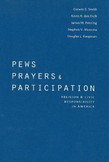
Is the "private" experience of religion counterproductive to engagement in public life? Does the "public" experience of religion contribute anything distinctive to civic engagement? This title offers a fresh approach to key questions about what role religion plays in fostering civic responsibility in contemporary American society.
Is the "private" experience of religion counterproductive to engagement in public life? Does the "public" experience of religion contribute anything distinctive to civic engagement? This title offers a fresh approach to key questions about what role religion plays in fostering civic responsibility in contemporary American society.
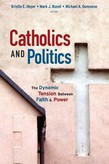
Catholic political identity and engagement defy categorization. This title takes up the political and theological significance of this 'integral unity,' the universal scope of Catholic concern that can make for strange political bedfellows, confound predictable voting patterns, and leave the church poised to critique narrowly partisan agendas.
Depicts the ambivalent character of Catholics' mainstream "arrival" in the US over the years, integrating social scientific, historical and moral accounts of persistent tensions between faith and power. This book describes the implications of Catholic universalism for voting patterns, international policymaking, and partisan alliances.