A contemporary follow-up to the groundbreaking Power of Maps, this book takes a fresh look at what maps do, whose interests they serve, and how they can be used in surprising, creative, and radical ways. Denis Wood describes how cartography facilitated the rise of the modern state and how maps continue to embody and project the interests of their ......
The highly commended first edition of this four-volume set remains the standard reference on J[um]urgen Habermas, the key theorist of the Frankfurt School and one of the most influential theorists of the twentieth and twenty-first centuries. With Habermas having developed his oeuvre substantially in the last decade, this new edition retains the key secondary literature while refreshing the critical canon with the most important papers published since the first edition in 2001. The editors, themselves a part of that canon, have updated the editorial material to reflect the latest hot topics in the study of this perennially relevant theorist. Volume One covers the huge base of secondary literature that has emerged on Habermas and the law since the publication of Between Facts and Norms in 1992. Volume Two collects the best writings on Habermas and politics. Volume Three treats epistemology and the theory of communication. Volume Four presents the key debates in what is perhaps the leading topic in the contemporary study of Habermas: ethics and religion.
Features essays on adultery, monogamy, perversion, homosexuality, pederasty, sex without love, sexual equality and more. This book also includes essays on the legalisation of same-sex marriage in Massachusetts and in South Africa (including a piece on homosexuality and Apartheid).
What would the world be like if there were no places? Our lives are so place-oriented that we cannot begin to comprehend the loss of locality. Indeed, the space we occupy has much to do with what and who we are. Yet, despite the pervasiveness of place in our everyday lives, philosophers have neglected it. Since its publication in 1993, Getting ......
On Freedom, Personal Identity, and the Possibility of Happiness
Thomas Aquinas and Jean-Paul Sartre are usually identified with completely different philosophical traditions: intellectualism and voluntarism. In this original study, Stephen Wang shows, instead, that there are some profound similarities in their understanding of freedom and human identity. Aquinas gives far more scope than is generally ......
Twenty-first-century society faces profound challenges, and the future seems anything but secure. The rapid advance of technology has far outpaced mankind's moral and religious development. There is greater material wealth now than in past centuries, yet poverty remains an international problem. Wars persist and global peace seems increasingly ......
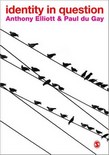
"A spectacular collection of essays by the most noted theorists of identity. The book well frames the issues around identity that presently are defining living in the early 21st century ... A must read." - Patricia Ticineto Clough, City University, New York "A wonderfully disparate and impressively distinguished set of authors to address the question of identity. The result is exciting and fruitful. No other book connects so elegantly sociological notions of individualization with the psychoanalysis of melancholy." - Scott Lash, Goldsmiths, University of London Identity in Question brings together in a single volume the world's leading theorists of identity to provide a decisive account of the debates surrounding self and identity. Presenting incisive analyses of the impact of globalization, postmodernism, psychoanalysis and post-feminism upon our imaginings of self, this book explores the complexity, contentiousness and significance of current debates over identity in the social sciences and the public sphere. As these contributions make clear, mapping the contours and consequences of transformations in identity in our globalizing world is not simply an academic exercise. It is a pressing concern for public and political debates. As identity continues its move to the centre of political life, so too do the possibilities for creatively re-imagining how we choose to live, both individually and collectively, in an age of uncertainty and insecurity. Identity in Question is essential reading for all students of self, identity, individualism and individualization.
"A spectacular collection of essays by the most noted theorists of identity. The book well frames the issues around identity that presently are defining living in the early 21st century ... A must read." - Patricia Ticineto Clough, City University, New York "A wonderfully disparate and impressively distinguished set of authors to address the question of identity. The result is exciting and fruitful. No other book connects so elegantly sociological notions of individualization with the psychoanalysis of melancholy." - Scott Lash, Goldsmiths, University of London Identity in Question brings together in a single volume the world's leading theorists of identity to provide a decisive account of the debates surrounding self and identity. Presenting incisive analyses of the impact of globalization, postmodernism, psychoanalysis and post-feminism upon our imaginings of self, this book explores the complexity, contentiousness and significance of current debates over identity in the social sciences and the public sphere. As these contributions make clear, mapping the contours and consequences of transformations in identity in our globalizing world is not simply an academic exercise. It is a pressing concern for public and political debates. As identity continues its move to the centre of political life, so too do the possibilities for creatively re-imagining how we choose to live, both individually and collectively, in an age of uncertainty and insecurity. Identity in Question is essential reading for all students of self, identity, individualism and individualization.
Cesar Chavez has long been heralded for his personal practice of nonviolent resistance in struggles against social, racial, and labor injustices. However, the works of Gandhi and Martin Luther King Jr. have long overshadowed Chavez's contributions to the theory of nonviolence. Jose-Antonio Orosco seeks to elevate Chavez as an original thinker, ......