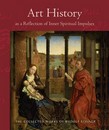
Rudolf Steiner understood that the history of art is a field in which the evolution of consciousness is symptomatically and transparently revealed. This informal sequence of thirteen lectures was given during the darkest hours of World War I. It was a moment when the negative consequences of what he called the age of the consciousness soul, which ......
In Always More Than One, the philosopher, visual artist, and dancer Erin Manning explores the concept of the "more than human" in the context of movement, perception, and experience. Working from Whitehead's process philosophy and Simondon's theory of individuation, she extends the concepts of movement and relation developed in her earlier work ......
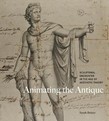
Sculptural Encounter in the Age of Aesthetic Theory
Explores tensions in aesthetics and art theory between antique figural sculpture experienced in the round and its translation into two-dimensional representations. Examines the work and thought of Goethe, Winckelmann, Hegel, Walter Pater, Vernon Lee, and others.
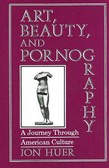
Making a radical departure from the conventional wisdom on art and beauty, this book presents the thesis that things of beauty are not only unrelated to art but often responsible for pornography.
"Wild Art" refers to work that exists outside the established, rarified world of art galleries and cultural channels. It encompasses uncatalogued, uncommodified art not often recognized as such, from graffiti to performance, self-adornment, and beyond. Picking up from their breakthrough book on the subject, Wild Art, David Carrier and Joachim ......
Art's Assemblies presents a new political aesthetics for the present. Claudia Breger makes a case for art's power to act politically in significant, manifold ways by reconnecting twenty-first-century philosophical frameworks to the more boldly political aesthetics of European modernisms, particularly as developed in response to historical fascism. ......
Tone Roald creates a new foundation for aesthetics by taking seriously real-life experiences with works of art. Relying upon descriptions of experiences with art in the autobiographical and literary texts of St. Augustine, Denis Diderot, Stendahl, Virginia Woolf, and Proust, as well as fifteen-years' worth of interviews with museumgoers about ......