In this bold work, Thomas Habinek offers an entirely new theoretical perspective on Roman cultural history. Although English words such as ''literature'' and ''religion'' have their origins in Latin, the Romans had no such specific concepts. Rather, much of the sense of these words was captured in the Latin word carmen, usually translated into ......
This special issue of the American Journal of Philology illuminates the nature and function of food and dining in the Roman world, offering historical, sociological, literary, cultural, and material perspectives.The articles collected here explore topics from diverse fields to analyze Roman culture and material practice, including the dietary ......
Composed in the third century A.D., the Trojan Epic is the earliest surviving literary evidence for many of the traditions of the Trojan War passed down from ancient Greece. Also known as the Posthomerica, or ''sequel to Homer,'' the Trojan Epic chronicles the course of the war after the burial of Troy's greatest hero, Hektor.Quintus, believed to ......
Worshiped throughout the ancient Mediterranean world, the 'Mother of the Gods' was known by a variety of names. Among peoples of Asia Minor, where her cult first began, she often shared the names of local mountains. The Greeks commonly called her Cybele, the name given to her by the Phrygians of Asia Minor, and identified her with their own mother ......
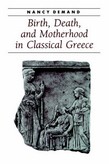
Why did Greek society foster social conditions, especially early marriage with its attendant early childbearing, that were known to be dangerous for both mother and child? What were the actual causes of death among women described as dying of childbirth in the Hippocratic Epidemics? Why did families choose to portray labor scenes on tombstones ......
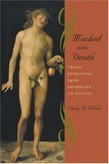
In Paradise Lost, Adam asks, 'Why do I overlive?' Adam's anguished question is the basis for a critical analysis of living too long as a neglected but central theme in Western tragic literature. Emily Wilson examines this experience in works by Milton and by four of his literary predecessors: Sophocles, Euripides, Seneca, and Shakespeare. Each of ......
The history of Spain in late antiquity offers important insights into the dissolution of the western Roman empire and the emergence of medieval Europe. Nonetheless, scholarship on Spain in this period has lagged behind that on other Roman provinces. Michael Kulikowski draws on the most recent archeological and literary evidence to integrate late ......
Cleopatra: kohl and vipers, barges and thrones, Elizabeth Taylor and Richard Burton. We have long been schooled in the myth of the Egyptian ruler. In his new book Michel Chauveau brings us a picture of her firmly based in reality. Cleopatra VII reigned in Egypt between 51 and 30 B.C.E. Her primary goal as a ruler was to restore over the eastern ......
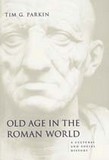
Classical authors such as Cicero and Plutarch would have us believe that the elderly were revered, active citizens of ancient Rome. But upon closer inspection, it appears that older people may not have enjoyed as respected or as powerful a place in Roman society as has been supposed.In this highly original work, Tim Parkin considers the many ......