As collective history becomes more tightly bound with personal narratives, the lines between history, memory, and commemoration have blurred. When history is inconvenient to a specific group, it is often compromised - watered down for public consumption. The articles in this special collection of The ANNALS examine what happens when scholars concentrate on an unsavory part of a collective history. Across the globe, the past gets politicized - used and misused. The articles in this volume focus on the political dynamics of confronting the publication of disagreeable findings about collective pasts. Most contributions cover a specific country or regional study where historical records are at odds with the collective story that has been embraced. The details of these highlighted conflicts vary, yet readers will notice striking similarities in the ways that contentious facts are handled by the collective society: Substantial delays in confronting an unpalatable aspect of the past Challenges to the motives, integrity, or loyalty of the messengers Attempts to quarantine information that is damaging to the established histories Taken together, this collection of articles explicate and analyze the myriad of ways that history has been politicized. Focusing on the tensions between differing conceptions of related histories and what happens when the self-concepts of two groups collide in the same narrative space, this provocative volume of The ANNALS raises many important questions. Researchers, students, and policy makers will find these articles, which challenge many accepted historical scripts, offer important insight into the way that politics have shaped history and will encourage new research and inspire further revision and ongoing reframing.
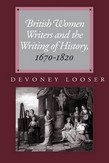
Until recently, history writing has been understood as a male enclave from which women were restricted, particularly prior to the nineteenth century. The first book to look at British women writers and their contributions to historiography during the long eighteenth century, British Women Writers and the Writing of History, 1670-1820, asks why, ......
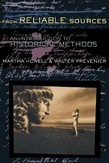
From Reliable Sources is a lively introduction to historical methodology, an overview of the techniques historians must master in order to reconstruct the past. Its focus on the basics of source criticism, rather than on how to find references or on the process of writing, makes it an invaluable guide for all students of history and for anyone who ......
'Building upon four decades of his own scholarly work in the field of history, Frykenberg presents a notable achievement for clarifying the rich overlap between facts and theory, evidence and belief, history and religion, East and West. He deserves to be commended.'--Lamin Sanneh, Yale Divinity School
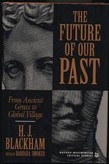
History has become focused on the future; the age of the information superhighway finds us always looking to the next horizon. But will there be a future for humanity? This book features an essay that follows the course of Western history into the post-religious present in terms of cultural inheritance and legacy.
This book will be of interest to anyone interested in the people and events that have helped shape the world, including mental health professionals and scholars studying psychological topics in the larger context of science, art and politics.
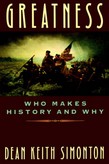
What do Madonna, Confucius, and Jackie Robinson have in common? What does it take to go down in history as a great political leader? Why do revolutions occur, riots break out, and lynch mobs assemble? Which events do people find the most shocking or memorable? This path-breaking work offers the first comprehensive examination of the important ......
Each of these essays is offered from the perspective of a specialty within the diverse and interdisciplinary field of medieval studies. They consider the development, present status and future prospects both of the specialty and of the broader context of medieval studies in the American university.