This book explores the effect of metacognitive regularities on the work efficiency of university teachers through a mixed-methods study. Grounded in models of metacognitive regularities and work efficiency, Khadija Marvi's study addresses a gap in existing research, as previous studies on metacognitive regularities have been limited to ......
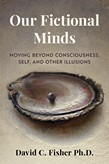
Moving Beyond Consciousness, Self, and Other Illusions
Our Fictional Minds examines and challenges our most common--and seemingly common-sense--ideas about human consciousness. Drawing on developments in neuroscience, psychology, and monitoring technology, psychologist David Fisher shows how and why our usual takes on the human mind both serve us and limit us. Instead, research points to a more ......
How a Catholic People's Movement Is Meeting the Challenge of AIDS in Africa and Shaping the Future of Global Health
The story of an innovative program of treatment for AIDS in Africa that succeeded in the face of international development agencies' "afro pessimism" Until this century, Western governments and foundations framing policies for AIDS relief in Africa maintained that prevention alone was a preferable alternative to prevention-plus-treatment, which ......
This book explains in layperson's terms a new approach to studying consciousness based on a partnership between neuroscientists and complexity scientists. The author, a physicist turned neuroscientist, outlines essential features of this partnership. The new science goes well beyond traditional cognitive science and simple neural networks, which ......
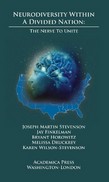
This collaborative book by five distinguished scholars in overlapping fields suggests that fruitful living is extremely hard work and that social harmony requires the unlocking and the emancipation of the human brain - the core cerebral source for advancing human coherence, connectivity, cohesion and civility. The stakes are simply too high for ......
Does cognitive science show that religious belief is irrational? Kelly James Clark brings together science and philosophy to examine some of humanity's more pressing questions. Is belief in God, as Richard Dawkins claims, a delusion? Are atheists smarter or more rational than religious believers? Do our genes determine who we are and what we ......
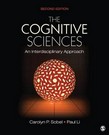
The Cognitive Sciences: An Interdisciplinary Approach, Second Edition offers an engaging, thorough introduction to the cognitive sciences. Authors Carolyn Sobel and Paul Li examine the historical and contemporary issues and research findings of the core cognitive science disciplines: cognitive psychology, neuroscience, artificial intelligence, linguistics, evolutionary psychology, and philosophy. For each of these core disciplines, the historical development and classic research studies are presented in one chapter and current research development and issues follow in a second chapter, offering students a broad understanding of the development of each concentration in the cognitive sciences. The text presents a student-friendly approach to understanding how each discipline has contributed to the growth of cognitive science and the implications for future research.