New Perspectives on Violence and Resistance in Turkey
With an estimated population of 35 million, Kurds are the largest ethnic group in the world without an independent state of their own. The majority of Kurds live in Turkey, where they constitute 18 percent of the population. Since the foundation of the Turkish republic in 1923, the history of the Kurds in Turkey is marked by state violence against ......
The definitive textbook from one of the most-cited scholars in the field of peace and conflict research. Understanding Conflict Resolution - the updated Sixth Edition - is a contemporary and fully revised introduction to resolving wars within and between states. It illustrates the ways to secure peace in the aftermath of all forms of political violence: from using armed force against civilians to gender-based violence; genocide to terrorism. Building on the many peace agreements that have been concluded in the past 30 years, this book draws on the UCDP, a definitive source for data on conflicts, wars and peace, and offers pathways to peace agreements in today's increasingly unpredictable global political landscape. Featuring the latest research and with examples throughout, including an analysis of the origins and dynamics of the Russia-Ukraine war, this text introduces the tools to understand conflict resolution and analyse future challenges to global peace. This new edition has been fully revised and updated. It includes a contemporary focus on issues and examples that reflect the dynamics of political conflict today, and the addition of three cases to demonstrate application of theory and conclusions drawing from the latest research and up-to-date UCDP data. The perfect guide for undergraduate and postgraduate students taking Peace and Conflict courses, and wider Programmes in Negotiations, Mediation, and the UN. Peter Wallensteen is a leading expert on international peace, Senior Professor of Peace and Conflict Research at Uppsala University, Sweden, and the founder and former director of UCDP, the Uppsala Conflict Data Program. He holds the position of Richard G. Starmann, Sr. Professor Emeritus in Peace Studies, Kroc Institute for International Peace Studies, University of Notre Dame, US.
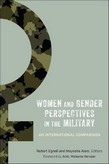
Women and Gender Perspectives in the Military compares the integration of women, gender perspectives, and the women, peace, and security agenda into the armed forces of eight countries plus NATO and UN peacekeeping operations. The countries examined are Sweden, the Netherlands, Canada, the United States, the UK, Israel, Australia, and South ......
Political repression often paradoxically fuels popular movements rather than undermining resistance. When authorities respond to strategic nonviolent action with intimidation, coercion, and violence, they often undercut their own legitimacy, precipitating significant reforms or even governmental overthrow. Brutal repression of a movement is often ......
Future Peace urges extreme caution in the adoption of new weapons technology and is an impassioned plea for peace from an individual who spent decades preparing for war. Today's militaries are increasingly reliant on highly networked autonomous systems, artificial intelligence, and advanced weapons that were previously the domain of science ......
This offer of leading-edge thinking reframe the debate on national security at the dawn of the Third Space Age During the First Space Age, President Eisenhower rallied democracies to defend freedom while preserving peace at a time when the hydrogen bomb and intercontinental ballistic missiles threatened humanity. Nearly seventy-five years later, ......
This offer of leading-edge thinking reframe the debate on national security at the dawn of the Third Space Age During the First Space Age, President Eisenhower rallied democracies to defend freedom while preserving peace at a time when the hydrogen bomb and intercontinental ballistic missiles threatened humanity. Nearly seventy-five years later, ......
How Emergent Powers Are Reshaping Global Conflict Management
In A Post-Liberal Peace, Monalisa Adhikari shows how rising powers like India and China are reshaping global peace governance. Over recent decades, both countries have deepened engagement with institutions built on liberal principles, including those related to peacebuilding. Their growing role raises critical questions about how their approaches ......
How Emergent Powers Are Reshaping Global Conflict Management
In A Post-Liberal Peace, Monalisa Adhikari shows how rising powers like India and China are reshaping global peace governance. Over recent decades, both countries have deepened engagement with institutions built on liberal principles, including those related to peacebuilding. Their growing role raises critical questions about how their approaches ......