"We can be grateful that Dr. Stake decided to cap his distinguished career by sharing his ideas in writing. This is a book that evaluators will want to have in their personal library. It tells us a lot about our field, highlights contrasting ways of evaluating without pitting one against the other, and manages to remind us why many of us chose ......
The variety of innovative techniques and theoretical perspectives offered in this volume should challenge readers to think about and expand on their understanding of qualitative research and its continually emerging applications.
"The writing style is good, clear, and accurate, with a logical presentation of material. The checklists are effective learning aids." --Carol J. Lancaster, Medical University of South Carolina When should you use a telephone survey, and how do you transform completed telephone interviews into an analyzable, machine-readable data file? ......
The Use of Factor Analysis for Instrument Development in Health Care Research
Many health care practitioners and researchers are aware of the need to employ factor analysis in order to develop more sensitive instruments for data collection. Unfortunately, factor analysis is not a unidimensional approach that is easily understood by even the most experienced of researchers. Making Sense of Factor Analysis: The Use of Factor ......
What's Good, What's Not, and How To Tell the Difference
In Making Sense of Research, the authors bring the best of two worlds to the writing of this book - the "real" world where education is practiced daily and the "research" world where the "disciplined search for knowledge" (Smith & Glass, 1987, p.6) is ongoing. Making Sense of Research is for those who make decisions - from the seemingly smallest teacher-made decision regarding time allocation during reading instruction to major national policy decisions such as reducing class size. When carefully read and thoughtfully considered, quality research can inform, enlighten, and provide direction to practitioners that will save time and money, but more importantly enhance the effectiveness of schools and increase the opportunities for student. Making Sense of Research is also about doing your own site-specific, user-driven research as a way of sustaining school improvement, keeping vision alive, and attaining your mission.
Asian Americans are proportionally the fastest growing ethnic group in the United States. This volume offers a framework for the conceptual and methodological development of Asian American psychology and provides future research directions by experts in the field.
Pragmatic Inquiry in Social Science and the Caring Professions
Small-Scale Research is a direct, comprehensive guide to doing theses, dissertations, papers and projects. Peter Knight systematically works through the central methods of inquiry and demonstrates the strengths and weaknesses of different approaches. He: * uses a direct writing style with plenty of examples from across a good range of social ......
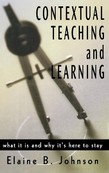
"Dr. Johnson's book is far more than a how-to guide for constructing meaningful learning activities for students. It is the definitive treatise on the fundamental concepts of acquiring and transferring knowledge. This is an invaluable contribution." Arlene H. Parisot, Director of Workforce Department Office of Commissioner of Higher Education Montana State System "This is a 'must' read for all teachers and administrators in their search for meaning. Elaine Johnson has artfully captured the essence of the 'best practices' conversation taking place in schools today by speaking directly to the heart of classroom experience." Stephen Olczak, Principal Reynolds High School Oregon Contextual teaching and learning (CTL) is a system for teaching that is grounded in brain research. Brain research indicates that we learn best when we see meaning in new tasks and material, and we discover meaning when we are able to connect new information with our existing knowledge and experiences. Students learn best, according to neuroscience, when they can connect the content of academic lessons with the context of their own daily lives. Johnson discusses the elements of the brain-compatible contextual teaching and learning system: making meaningful connections; investing school work with significance; self-regulated learning; collaboration; critical and creating thinking; nurturing the individual; reaching high standards; and using authentic assessment. Drawing on the practices of teachers in kindergarten through university, Johnson provides numerous examples of how to use each part of the CTL system. Contextual Teaching and Learning: What it Is and Why It's Here to Stay is more than a handbook on precise steps to follow to help children of all abilities achieve high standards by joining academic lessons with their immediate context. This book also explains how the brain works, discusses why teachers need to pay attention to context, and makes a strong case for the need to teach students to think critically and creatively. This inspirational book urges educators to eliminate the student question: "Why do we have to learn this?" If the educators invest learning with meaning by relying on context, that question won't have to be asked.
Challenges and Opportunities in Standards-Based Reform
Amid widespread concern that schools are failing to prepare students for workforce participation, higher education, and the economic and technological challenges of the twenty-first century, public school reform efforts across the nation have focused increasingly on standards, performance, and accountability. A particularly critical question ......