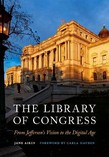
The first comprehensive history of the Library of Congress The Library of Congress is the research arm of Congress, home of the US Copyright Office, and a public forum for artistic and literary culture. It is generally considered the national library of the United States, and it has influenced cultural affairs worldwide in myriad ways since its ......
The Renaissance Continuation of Ancient Literature
How Renaissance writers rebuilt ancient texts, one fragment at a time. Across the European Renaissance, ancient literature circulated in damaged, incomplete, and fragmentary forms. Missing lines, lost endings, and textual gaps were not obstacles to reading the classics; instead, they were invitations to fill in the blanks. In Antiquity Made ......
The image of the dusty, undisturbed archive has been swept away in response to growing interest across disciplines in the materials they house and the desire to find and make meaning through an engagement with those materials. Archival studies scholars and archivists are developing related theoretical frameworks and practices that recognize that ......
Archives and Time Travel in the Popular Imagination
The fascination with time travel and its consistent popularity within the science fiction genre is deeply rooted in science fiction writers' and readers' passion for history and, by extension, for libraries and other kinds of archives. However, time travel, archives, and history intersect in the public imagination in ways that don't always match ......
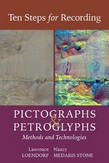
Pictograph and petroglyph sites, commonly identified as sacred by Indigenous communities, offer the potential of great insight into past belief systems and ritual activities if carefully recorded. The aesthetic appeal of the art itself has long been appreciated, and chemical and artistic analyses have been applied to these depictions to uncover ......
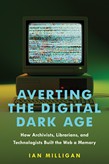
How Archivists, Librarians, and Technologists Built the Web a Memory
How the internet's memory infrastructure developed-averting a "digital dark age"-and introduced a golden age of historical memory. In early 1996, the web was ephemeral. But by 2001, the internet was forever. How did websites transform from having a brief life to becoming long-lasting? Drawing on archival material in the Internet Archive and ......
This research tradition has arisen from a specific set of historical, disciplinary and institutional conditions. The very emergence of 'documentation' is predicated upon a set of long-term processes in which humans have developed the capacity to use symbols and store knowledge such that it can be exchanged and inter-generationally transmitted.Consisting of an impressive list of contributors, the four volumes discuss the history, development and current debates alive in the field, such as the biographical turn in social science, the theoretical underpinnings to using human documents in social research and the epistemological, substantive and practical concerns with the process of analyzing data from human documentary sources.Comprehensive, illuminating and dynamic, this collection will have appeal across all social science disciplines, especially sociology, social psychology, criminology, politics and international relations, management and business studies, human geography, media and communication studies Volume One: Human Documents: Perspectives and Approaches Volume Two: Analyzing Human Documents Volume Three: Human Documents in Social Research Volume Four: Archival Research and Data Re-Use