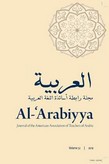
Journal of the American Association of Teachers of Arabic, Voulme 53, Volume 53
Al-'Arabiyya Volume 53 features five articles and six book reviews. Three of the articles contribute in many meaningful ways to Arabic sociolinguistics, one to Arabic second language learning and teaching pedagogy, and one to Arabic dialectology.
Second language classrooms provide unique opportunities for intellectual growth, cognitive skill development, and cultural exchange. In Integrating the Digital Humanities into the Second Language Classroom, Melinda A. Cro makes the case for bringing the digital humanities (DH) into that sphere, strengthening students' language skills while ......
Technology and Foreign Language Learning, Third Edition
Robert Blake, now with Gabriel Guillen, updates his successful book (1st ed. 2008, 2nd ed. 2013) on how to teach foreign languages using technology. Brave New Digital Classroom touches on all of the key concepts and challenges of teaching with technology, focusing on issues specific to FLL or L2 learning and CALL. Originally referred to as ......
Integrating Career Preparation into Language Courses provides foreign and second language teachers with easy and practical additions they can make to their existing curricula to help their students develop real-world professional skills and prepare to use the target language successfully in the workplace. The book is organized into six chapters, ......
Journal of the American Association of Teachers of Arabic, Volume 51, Volume 51
Al-'Arabiyya is the annual journal of the American Association of Teachers of Arabic and serves scholars in the United States and abroad. Al-'Arabiyya includes scholarly articles and reviews that advance the study, research, and teaching of Arabic language, linguistics, literature, and pedagogy.
Community-based Language Learning offers a new framework for world language educators interested in integrating community-based language learning into their teaching and curricula. CBLL connects academic learning objectives with experiential learning, ranging from reciprocal partnerships with the community to one-directional learning situations.
Community-based Language Learning offers a new framework for world language educators interested in integrating community-based language learning into their teaching and curricula. CBLL connects academic learning objectives with experiential learning, ranging from reciprocal partnerships with the community to one-directional learning situations.
This guide, designed to help language educators meet the needs of program evaluation and assessment often requested by their institutions, provides step-by-step advice to help educators conduct evaluation and assessment and to show how it can lead to meaningful programmatic change and provide useful data on which to base curricular decisions.