This five-volume collection lays out the foundations and nuances of literacy studies. Beginning with the theoretical and epistemological perspectives that have been influential in shaping contemporary approaches in literacy studies, the set further explores new digital literacies, literacy in educational and institutional contexts, and the crucial issues of literacy in relation to social mobility, multilingualism and globalization. With a full introduction to the set and to each volume, researchers will find in this set a comprehensive guide to this crucial area of study.
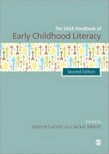
This new edition of the much-loved Handbook of Early Childhood Literacy has been revised and updated to retain its cutting-edge focus on emergent and important areas of research. This comprehensive and ground-breaking work guides the reader through current social, cultural and historical analysis on a global scale. The new edition contains a greater range of methodologies, and chapters on: @! space and literacy @! disabilities and early childhood literacy @! digital literacies @! indigenous literacy @! play and literacy @! policy In the Handbook, readers will find coverage of all the key topics in early childhood literacy, including perspectives; literacy in families, communities and cultures; making meaning; literacy in preschool settings and schools, and various research methodologies. The exceptional list of contributors offers in-depth expertise in their respective areas of knowledge. This Handbook is essential for BA QTS students; MEd in Literacy students; PhD students; undergraduate, postgraduate and CPD students; researchers, and literacy-centre personnel. Anyone involved in Early Years education and teaching reading and writing will find it illuminating.
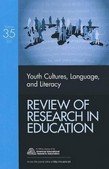
Drawing upon international research, Review of Research in Education, Volume 35 examines the interplay between youth cultures and educational practices. Although the articles describe youth practices across a range of settings, a central theme is how gender, class, race, and national identity mediate both adult perceptions of youth and youths' experiences of schooling.
This book supports trainee teachers in the lifelong learning sector in the assessment of their literacy knowledge. A self audit section is included to help trainees understand their level of competence and confidence in literacy and helps them identify any gaps in their knowledge and skills. This is followed by exercises and activities to support and enhance learning. The book covers all the content of the LLUK standards for the minimum core for literacy. Coverage and assessment of the core has to be embedded in all Certificate and Diploma courses leading to QTLS and ATLS status.
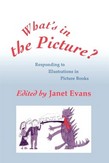
`The book will be of interest to anyone sharing pictorial texts with children, professionally or privately' - School Librarian `The collection, like the texts it analyzes, is rich and variable and early years educators will have to be selective in the papers they concentrate on, but there are some gems to be found.... It would appear that there are many things in the picture - this is an exciting start!' - TACTYC Illustrations are one of the most important cueing systems which children can draw on to help them make sense of print. This book covers many issues involved in using picture books: their role in early literacy; in intellectual and emotional development; their use as a learning resource; as an aid to aesthetic development; their use in extending children's thinking; and their role in developing reading skills. The meanings we attribute to texts are partly determined by the culture in which we have grown up, and by factors such as race, gender and class. A theme of this book is the interaction between what readers bring to a text; their response to a text, and the multi-layers of meaning in the text itself. What's in the Picture? includes contributions from leading writers in the field, as well as a unique interview with Anthony Browne, creator of Gorilla and other Browne books.
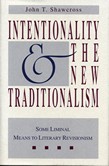
Intentionality and the New Traditionalism argues that both the text and the author of a literary work are important to a cogent and full reading of that work. The author creates the text, which then leads the reader into a reading of it through its various elements or literary devices that have been consciously employed by the author. ......
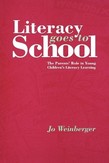
The Parents' Role in Young Children's Literacy Learning
`Very accessible - not too technical or jargon-ridden. The practical suggestions were useful too - if professionals feel inspired to promote change in their practice and policy it is helpful to have suggestions on where to start and what to do' - Management in Education Few primary teachers have a chance to find out in detail what children have already learnt, and continue to learn, about literacy at home with their parents. This book gives a clear demonstration of literacy learning that takes place at home, and how it differs from, as well as relates to, literacy at school. It will help teachers to increase their understanding of this process and to build on their relationship with parents. Such understanding, the book shows, can directly enhance children's literacy performance in school.
"Burniske shows us how to expand our instruction so that electronic literacy becomes an essential component of our classrooms. He challenges us to realize our commitment to develop our students as critical and reflective language users. This is a book all serious literacy professionals need to read and discuss with colleagues." -From the Foreword by Donna Ogle Help students become ethical, well-informed online communicators! Living in today's digital age provides a wealth of learning opportunities and a wide range of communication possibilities. Along with its many benefits, the World Wide Web poses real challenges to even the most informed user, from misinformation to unedited work to plagiarism. How can we teach students to use the Internet intelligently and responsibly? In this insightful resource, internationally recognized professor and author R. W. Burniske takes an in-depth look at the Internet's advantages and risks and shows teachers how to incorporate technology to help students communicate clearly, accurately, and purposefully. Using specific case studies, teacher tips, and practical ideas, this valuable resource gives teachers guidelines to help students develop their ability to: Use language critically and tactfully Assess visual content on the Web Critically evaluate Web sites for validity and reliability Practice ethics and etiquette on the Internet Analyze online information for credibility, logic, and embedded emotional content Literacy in the Digital Age, Second Edition, provides everything educators need to make digital literacy a vital part of their classroom instruction.
"Burniske shows us how to expand our instruction so that electronic literacy becomes an essential component of our classrooms. He challenges us to realize our commitment to develop our students as critical and reflective language users. This is a book all serious literacy professionals need to read and discuss with colleagues." -From the Foreword by Donna Ogle Help students become ethical, well-informed online communicators! Living in today's digital age provides a wealth of learning opportunities and a wide range of communication possibilities. Along with its many benefits, the World Wide Web poses real challenges to even the most informed user, from misinformation to unedited work to plagiarism. How can we teach students to use the Internet intelligently and responsibly? In this insightful resource, internationally recognized professor and author R. W. Burniske takes an in-depth look at the Internet's advantages and risks and shows teachers how to incorporate technology to help students communicate clearly, accurately, and purposefully. Using specific case studies, teacher tips, and practical ideas, this valuable resource gives teachers guidelines to help students develop their ability to: Use language critically and tactfully Assess visual content on the Web Critically evaluate Web sites for validity and reliability Practice ethics and etiquette on the Internet Analyze online information for credibility, logic, and embedded emotional content Literacy in the Digital Age, Second Edition, provides everything educators need to make digital literacy a vital part of their classroom instruction.