A Journey through Translation, Interpretation, and Meaning
In the labyrinth of human experience, language stands as both a monument to our ingenuity and a barrier to our understanding. It is the medium through which we convey not just thoughts and ideas but the very essence of our cultures, emotions, and identities. Yet, in its complexity lies a challenge-a challenge that has persisted through the ages, ......
Nenets Reindeer Herders and Russian Evangelical Missionaries in the Post-Soviet Arctic
Words and Silences tells the story of an extraordinary group of independent Nenets reindeer herders in the northwest Russian Arctic. Under socialism these nomads managed to avoid the Soviet state and its institutions of collectivization, but soon after the atheist regime collapsed, while some staunchly resisted, many of them became fervent ......
Nenets Reindeer Herders and Russian Evangelical Missionaries in the Post-Soviet Arctic
Words and Silences tells the story of an extraordinary group of independent Nenets reindeer herders in the northwest Russian Arctic. Under socialism these nomads managed to avoid the Soviet state and its institutions of collectivization, but soon after the atheist regime collapsed, while some staunchly resisted, many of them became fervent ......
Being serious demands serious kinds of work. In Styles of Seriousness, Steven Connor reflects on the surprisingly various ways in which a sense of the serious is made and maintained, revealing that while seriousness is the most powerful feeling, it is also the most poignantly indeterminate, perhaps because of the impossibility of being completely ......
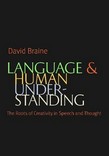
Human speech and writing reveal our powers both to generalize and to criticize our own procedures. For this we must use words non-mechanically and with a freedom without definite limits, but still allowing mutual intelligibility. Such powers cannot be simulated by any possible physical mechanism, and this shows that human beings in our acts of ......
Nimble Tongues is a collection of essays that continues Steven G. Kellman's work in the fertile field of translingualism, focusing on the phenomenon of switching languages. A series of investigations and reflections rather than a single thesis, the collection is perhaps more akin in its aims-if not accomplishment-to George Steiner's ......
In the past few decades, cognitive linguistics has developed into one of the most dynamic and empirically insightful frameworks within theoretical and descriptive linguistics. It represents a revolutionary, new movement in modern linguistics which includes a variety of approaches and methodologies. They are, however, unified by a number of common assumptions. Foremost among these is the thesis of "cognition and embodiment": (i) language forms an integral part of human cognition, and (ii) any insightful analysis of linguistic phenomena needs to be embedded in what is known about human cognitive abilities and embodied experience. Cognitive linguistics aims, in new and insightful perspectives, for a cognitively plausible and natural account of what it means to know language, how language evolutionally emerged, how language is acquired, how language dynamically changes, and how language is used for communication in a creative way. This five-volume major work brings together articles on this broad subject which take up a number of crucial issues both theoretical and methodological; investigate research questions relating to phonology, morphology and grammar; explore issues relating to the semantic and pragmatic mechanism of language and communication; and outline and survey the interdisciplinary relationship between cognitive linguistics and related fields of cognitive science.
Human speech and writing reveal our powers both to generalize and to criticize our own procedures. For this we must use words non-mechanically and with a freedom without definite limits, but still allowing mutual intelligibility. Such powers cannot be simulated by any possible physical mechanism, and this shows that human beings in our acts of ......
Contains the principal texts of the sceptical tradition from its origins in antiquity to contemporary philosophy. This work includes the writings of influential philosophers of the Western tradition who either advanced sceptical views or dealt with sceptical issues for other philosophical or religious purposes.