How America's Most Famous Architect Found Inspiration in His Home State
Americas most famous architect, Frank Lloyd Wright, was born in 1867 in the rolling hills of Richland Center, Wisconsin, to a family of Unitarians and Quakers. Even with world-class commissions like New York Citys Guggenheim Museum, his organic architecture remains rooted in Wisconsins landscape, from affordable-housing prototypes in Milwaukee ......
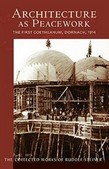
At the outbreak of World War I in August 1914, the construction of the singular architectural masterwork that would later be called the Goetheanum (and, later still, the First Goetheanum) was already well under way on a hill just above the village of Dornach in neutral Switzerland. There, a small international community had gathered over the ......
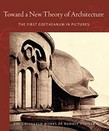
Rudolf Steiner gave thousands of lectures in his lifetime, usually without notes, and, with very few exceptions, with nothing more than chalk and a blackboard if he chose to accompany his speech with some kind of visual illustration. A notable exception is the presentation that constitutes the main part of this book. Given in June 1921, in Bern ......
The Picasso sketchbook featured here dates back to March 1923 and has never been seen before.It was part of a cache of works stolen over decades by Picasso's electrician and only discovered when he and his wife tried to sell some pieces in 2020. A facsimilie of the sketchbook itself, bound in real linen cloth that has been specifically aged to ......
William J. Wilson's Speculative Museum of Black Art
In The Afric-American Picture Gallery, Britt Rusert examines a work of periodical fiction by educator and activist William J. Wilson called, "Afric-American Picture Gallery," an episodic series of experimental prose and biting satire that was published in 1859. It tells the tale of a flaneur character who takes readers on a virtual tour through an ......
William J. Wilson's Speculative Museum of Black Art
In The Afric-American Picture Gallery, Britt Rusert examines a work of periodical fiction by educator and activist William J. Wilson called, "Afric-American Picture Gallery," an episodic series of experimental prose and biting satire that was published in 1859. It tells the tale of a flaneur character who takes readers on a virtual tour through an ......
A Guide to the Historic Homes and Everyday Landscapes of the Early TaosArt Colony
An exclusive look at the historic home gardens and vernacular landscapes of the modernist artists who flocked to Taos, New Mexico, during the early-twentieth century. Richly illustrated, architectural historian Audra Bellmore's Gardens of the Taos Artists centers the homes, gardens, and intimate landscapes of the Taos artist colonies and ......
Moving Stones explores the extraordinary life and work of Edmonia Lewis, the Black and Ojibwe sculptor who rose to international fame in the nineteenth century. Blending biography, history, and theory, Jennifer DeVere Brody approaches Lewis's legacy through a Black feminist and queer lens, illuminating how her sculptures and self-fashioning ......
Moving Stones explores the extraordinary life and work of Edmonia Lewis, the Black and Ojibwe sculptor who rose to international fame in the nineteenth century. Blending biography, history, and theory, Jennifer DeVere Brody approaches Lewis's legacy through a Black feminist and queer lens, illuminating how her sculptures and self-fashioning ......