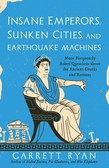
More Frequently Asked Questions about the Ancient Greeks and Romans
In a series of short and humorous essays, Insane Emperors, Sunken Cities, and Earthquake Machines features more answers to questions that ancient historian Garrett Ryan is frequently asked in the classroom, in online forums, and on his popular YouTube channel Told in Stone.
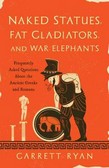
Frequently Asked Questions About the Ancient Greeks and Romans
Why didn't the ancient Greeks or Romans wear pants? How did they shave? How likely were they to drink fine wine, use birth control, or survive surgery? In a series of short and humorous essays, Naked Statues, Fat Gladiators, and War Elephants explores some of the questions about the Greeks and Romans that ancient historian Garrett Ryan has ......
More Frequently Asked Questions about the Ancient Greeks and Romans
Could a Roman bridge carry a modern freight train? How much would it cost to build the Colosseum today? What if the Romans had grown potatoes?
In a series of fast-paced essays, Leaky Aqueducts, Battle Pigeons, and Mystery Cults answers questions that historian Garrett Ryan has been asked in the classroom ......
The Roots of "Spiritual But Not Religious" in Antiquity
The first volume of Michael Horton's magisterial intellectual history of "spiritual but not religious" as a phenomenon in Western culture Discussions of the rapidly increasing number of people identifying as "spiritual but not religious" tend to focus on the past century. But the SBNR phenomenon and the values that underlie it may be older ......
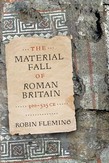
Although lowland Britain in 300 CE had been as Roman as any province in the empire, in the generations on either side of 400, urban life, the money economy, and the functioning state collapsed. Many of the most quotidian and fundamental elements of Roman-style material culture ceased to be manufactured. Skills related to iron and copper smelting, ......
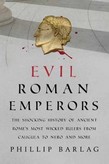
The Shocking History of Ancient Rome's Most Wicked Rulers from Caligula to Nero and More
"Evil Roman Emperors puts the worst of Romes rulers in one place and offers a review of their lives and a historical context for what made them into what they became. It concludes by ranking them, counting down to the worst ruler in Romes long history"--
Early Christian Distinctiveness in the Roman World
Silly,"" ""stupid,"" ""irrational,"" ""simple."" ""Wicked,"" ""hateful,"" ""obstinate,"" ""anti-social."" ""Extravagant,"" ""perverse."" The Roman world rendered harsh judgments upon early Christianity - including branding Christianity ""new."" Novelty was no Roman religious virtue. Nevertheless, as Larry W. Hurtado shows in Destroyer of the ......
Was Paul silent on the injustices of the Roman Empire? Or have his letters just been misread? The inclusion of anti-imperial rhetoric in Paul's writings has come under scrutiny in recent years. Pressing questions about just how much Paul critiques Rome in his letters and how publicly critical he could have afforded to be have led to high-profile ......
The most important illuminating source that survived from the two centuries termed "the dark ages of Byzantium" is the chronicle of the monk Theophanes (d. 817 or 818). In it Theophanes paints a vivid picture of the Empire's struggle in the seventh and eighth centuries both to withstand foreign invasions and to quell internal religious conflicts. ......