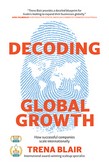
Nearly 70% of businesses fail when they scale. So what does it take to be one of the 30% that succeed? Trena Blair knows the appeal of wanting to think big. As an advisor and strategist, she’s worked with companies around the globe to help expand their businesses from successful companies to mega players on the international stage.
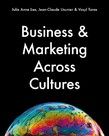
In an increasingly interconnected and global business environment, it is crucial that businesses recognise how a better understanding of cultural differences can help to foster greater business success. This book will help you to develop essential cross-cultural insights for when business and marketing goes global through a range of frameworks and learning features. The authors explore the roles of culture, communication, language, interactions, decision-making, market entry and business planning when working across geographical regions. They recognise the rich diversity in international markets and local consumer knowledge and marketing practices. Readers are encouraged to engage in cultural self-reflection to help better design and implement business strategies in local markets. Throughout, the book links to the x-culture learning project, which is an experiential multicultural exercise and form of student assessment where collaborative virtual teams are formed and together solve real world international business problems. This is an essential textbook for university and college students of international and cross-cultural marketing as well as international and intercultural business. It will also be of interest to business and marketing practitioners working in global contexts.
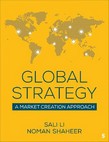
Global Strategy is a groundbreaking textbook that redefines the field of global strategy, shifting the focus from scaling established businesses to creating innovative businesses responding to international market needs. It equips future multinational leaders with the tools and insights needed to succeed in the rapidly evolving world of global ......
This timely textbook is contemporary and comprehensive in its coverage of Cross-Cultural Management, and unique in its approach which fosters a multi-paradigmatic mindset among readers; embraces problem-based and experiential learning; and acknowledges the many diverse identities of cross-cultural managers. Part I provides an overview on how Cross-Cultural Management emerged and why it is unique, and Part II integrates the functionalist, interpretive and critical perspectives underpinning it. Part III transfers this learning to areas of application, including international business, organizations, technology and social media, and Part IV focuses on key skillsets such as developing your managerial competencies and designing your own research. Each chapter is brought to life via an opening case study, and readers are invited to complete a variety of activities throughout chapters. Afterwards, the opening case is revisited, and a closing activity introduces the next area of learning. This textbook is essential reading for higher education students, educators and researchers alike, and will also be of interest to business and management practitioners. It can be used as a central text for university and college courses on and related to Cross-Cultural Management, International Business and general intercultural competencies. Jasmin Mahadevan is a Professor of International and Cross-Cultural Management at Pforzheim University, Germany.
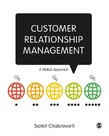
Customer Relationship Management: A Global Approach provides a uniquely global, holistic, strategic and tactical grounding in managing customer and other stakeholder experiences and relationships across the value chain, cultures and countries. Reflecting the global structures of companies operating today, the author draws on his research knowledge alongside industry and teaching experience to connect Customer Relationship Management (CRM) core concepts, processes and strategies with international business opportunities and challenges, including globalization and cross-cultural marketing. Emphasis is placed on the need for developing cross-cultural skills and cultural intelligence for identifying and fulfilling cross country CRM opportunities, through analytical, strategic, operational and social CRM projects. Written in an accessible style throughout, the eleven chapters provide ample depth to support a full course related to CRM, spanning: * CRM foundations * planning and implementation * managing stakeholder relationships * improving global CRM implementation Wide-ranging case studies include: Royal Bank of Scotland, the Nike hijab, Instagram, HubSpot and the pharmaceutical industry in India. The text will appeal to advanced undergraduate and graduate students studying CRM, Relationship Marketing and International Marketing, as well as CRM and marketing practitioners.
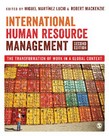
Written by an internationally renowned team of experts and underpinned by cutting-edge research, International Human Resource Management tackles a broad range of controversial and often marginalised issues associated with globalisation and its impact on multinational companies and employees. Updated throughout with brand-new case studies, reflective questions and recommended reading, the second edition includes coverage of: * International assignments and worker mobility * The development of new technology and its impact on work * International HRM and the platform economy * The nature of organisational change * The role of sustainability and social responsibility within the firm This innovative and thought-provoking textbook is suitable for students of International Human Resource Management and Employment Relations. Lecturers can visit study.sagepub.com/martinezluciomackenzie to access PowerPoint slides and additional case study material. Miguel Martinez Lucio is a Professor at the University of Manchester (Alliance Manchester Business School), UK. Robert MacKenzie is Professor of Working Life Science at Karlstad Business School, Karlstad University, Sweden.
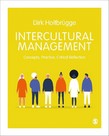
This textbook explores the reasons for intercultural differences and their effects on the behavior of individuals and organizations within the context of management. The text embraces the presence of ambiguity and complexity and encourages critical thinking when it comes to intercultural relations in order to avoid ethnocentrism, stereotyping and prejudice, as well as overly simplistic solutions. Integrating findings from management, but also the humanities and social sciences, as well as politics and popular culture, intercultural management is understood as a phenomenon that transcends disciplinary boundaries and includes questions around identity constructions, power relations, and ethics. This makes intercultural management a fascinating and rewarding subject to study. Throughout, the author encourages an analytical approach to intercultural management built upon strong methodological foundations, and draws on examples from a wide range of different contexts and cultures to help reflectively translate research and concepts into practice in a way that is lively and engaging. This textbook is essential reading for students taking university courses related to intercultural management. Lecturers can visit the companion website to access a Teaching Guide and PowerPoint slides that can be adapted and edited to suit teaching needs. Dirk Holtbrugge is Professor of International Management at the School of Business, Economics and Society, Friedrich-Alexander-University Erlangen-Nurnberg, Germany.
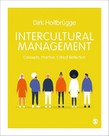
This textbook explores the reasons for intercultural differences and their effects on the behavior of individuals and organizations within the context of management. The text embraces the presence of ambiguity and complexity and encourages critical thinking when it comes to intercultural relations in order to avoid ethnocentrism, stereotyping and prejudice, as well as overly simplistic solutions. Integrating findings from management, but also the humanities and social sciences, as well as politics and popular culture, intercultural management is understood as a phenomenon that transcends disciplinary boundaries and includes questions around identity constructions, power relations, and ethics. This makes intercultural management a fascinating and rewarding subject to study. Throughout, the author encourages an analytical approach to intercultural management built upon strong methodological foundations, and draws on examples from a wide range of different contexts and cultures to help reflectively translate research and concepts into practice in a way that is lively and engaging. This textbook is essential reading for students taking university courses related to intercultural management. Lecturers can visit the companion website to access a Teaching Guide and PowerPoint slides that can be adapted and edited to suit teaching needs. Dirk Holtbrugge is Professor of International Management at the School of Business, Economics and Society, Friedrich-Alexander-University Erlangen-Nurnberg, Germany.