This book provides up to date discussion and evidence about inequalities, social divisions and stratification. Its innovative style engages readers and encourages them to reflect upon the many dimensions of social inequality. This updated third edition contains: Three new chapters on employment, sexualities and migration Updated coverage of intersectionality throughout Thirteen new in-depth case studies (one per chapter) This is a must read as a key introductory companion for students who wish to understand the dynamics of contemporary social inequality. Louise Warwick-Booth is a Reader at the School of Health, Leeds Beckett University
A biography of an influential radical conservative who sought to unite the far right Willis Carto (1926-2015) was arguably the most important radical conservative in postwar America. Best known as the founder of the infamous Liberty Lobby, he has shaped the far right's position on such issues as immigration, globalization, multiculturalism, ......
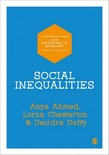
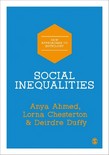
Part of the New Approaches to Sociology series, Social Inequalities is a relevant and valuable exploration of how we see the world, through a decolonised lens. Aimed at undergraduate and postgraduate students of sociology, this textbook offers a critical re-reading of traditional approaches to understanding social inequalities and responds to the call from university administrations, academics and students to decolonise the curriculum and challenge its lack of diversity. It presents an intersectional approach to understanding diversity and social inequalities and, in so doing, allows for alternative knowledge sources and voices to be heard. From looking at social groups such as race, age, sexuality and class alongside a nuanced evaluation of traditional sociological theories such as Marxism, functionalism and feminism - this book is an expert guide to the debates central to understanding the challenges individuals face in society. Including personal stories and case studies, students will be exposed to an authentic and real-world view of how individuals have encountered discrimination. Social Inequalities is an essential resource for anyone working and studying across sociology, and anyone interested in challenging established ways of looking at the world. Professor Anya Ahmed, Dr Deirdre Duffy and Dr Lorna Chesterton work in the faculty of health and education at Manchester Metropolitan University, UK.
Part of the New Approaches to Sociology series, Social Inequalities is a relevant and valuable exploration of how we see the world, through a decolonised lens. Aimed at undergraduate and postgraduate students of sociology, this textbook offers a critical re-reading of traditional approaches to understanding social inequalities and responds to the call from university administrations, academics and students to decolonise the curriculum and challenge its lack of diversity. It presents an intersectional approach to understanding diversity and social inequalities and, in so doing, allows for alternative knowledge sources and voices to be heard. From looking at social groups such as race, age, sexuality and class alongside a nuanced evaluation of traditional sociological theories such as Marxism, functionalism and feminism - this book is an expert guide to the debates central to understanding the challenges individuals face in society. Including personal stories and case studies, students will be exposed to an authentic and real-world view of how individuals have encountered discrimination. Social Inequalities is an essential resource for anyone working and studying across sociology, and anyone interested in challenging established ways of looking at the world. Professor Anya Ahmed, Dr Deirdre Duffy and Dr Lorna Chesterton work in the faculty of health and education at Manchester Metropolitan University, UK.
This book provides up to date discussion and evidence about inequalities, social divisions and stratification. Its innovative style engages readers and encourages them to reflect upon the many dimensions of social inequality. This updated third edition contains: Three new chapters on employment, sexualities and migration Updated coverage of intersectionality throughout Thirteen new in-depth case studies (one per chapter) This is a must read as a key introductory companion for students who wish to understand the dynamics of contemporary social inequality. Louise Warwick-Booth is a Reader at the School of Health, Leeds Beckett University
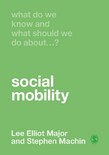
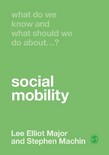
Featured in the Financial Times Best Books of the Year 2020 The evidence is rigorously marshalled and the...solutions equally clearly illuminated. A definitive study. - Martin Wolf, Chief Economics Commentator, The Financial Times In this vital new book, Britain's first Professor of Social Mobility Lee Elliot Major and Stephen Machin, reveal the causes of the UK's low social mobility, explain why it's getting worse, and outline how we reverse this worrying trend, before it's too late. It covers the history of social mobility in the UK, explores international comparisons, analyses the recent 'dark age' of declining absolute mobility, and investigates issues such as how family traits affect inter-generational mobility. The authors then outline what it is we should do about this pressing issue. Calling for a fundamental shift in debates about social mobility and arguing that only by establishing general principles of fairness in society can we agree the major policy reforms that can make Britain a more mobile and just society for all.
Featured in the Financial Times Best Books of the Year 2020 The evidence is rigorously marshalled and the...solutions equally clearly illuminated. A definitive study. - Martin Wolf, Chief Economics Commentator, The Financial Times In this vital new book, Britain's first Professor of Social Mobility Lee Elliot Major and Stephen Machin, reveal the causes of the UK's low social mobility, explain why it's getting worse, and outline how we reverse this worrying trend, before it's too late. It covers the history of social mobility in the UK, explores international comparisons, analyses the recent 'dark age' of declining absolute mobility, and investigates issues such as how family traits affect inter-generational mobility. The authors then outline what it is we should do about this pressing issue. Calling for a fundamental shift in debates about social mobility and arguing that only by establishing general principles of fairness in society can we agree the major policy reforms that can make Britain a more mobile and just society for all.
Ethnic and religious differences, a widening socio-economic divide, tension between foreigners and locals. These are some of the contemporary challenges to integration in Singapore. How we navigate them will determine the type of society we become. This book gathers the best social scientists in Singapore to examine issues of ethnicity, religion, ......
Social Mobility: Chance or Choice?, a sequel to `Born to Fail? Social Mobility, a Working Class View' (October 2017), sets out the current chances and choices available for those considered by the establishment to need social mobility. Revisiting mutuality, Sonia Blandford asks whether we care enough as a society by considering the issues, ......