The Sage Handbook of Psychological Perspectives on Diversity, Equity, and Inclusion is a landmark volume that brings together global scholarship to examine the psychological foundations, challenges, and possibilities of DEI in today's world. At a time when DEI efforts are increasingly under political and cultural scrutiny, this handbook offers a ......
Revisiting the Classic Studies is a series of texts that introduces readers to the studies in psychology that changed the way we think about core topics in the discipline today.
Revisiting the Classic Studies is a series of texts that introduces readers to the studies in psychology that changed the way we think about core topics in the discipline today. It provokes students to ask more interesting and challenging questions about the field by encouraging a deeper level of engagement both with the details of the studies ......
***Winner of a 2021 APEX Award for Publication Excellence*** Written by leading social psychologists with expertise in leadership, health and emergency behaviour - who have also played an important role in advising governments on COVID-19 - this book provides a broad but integrated analysis of the psychology of COVID-19 It explores the response to COVID-19 through the lens of social identity theory, drawing from insights provided by four decades of research. Starting from the premise that an effective response to the pandemic depends upon people coming together and supporting each other as members of a common community, the book helps us to understand emerging processes related to social (dis)connectedness, collective behaviour and the societal effects of COVID-19. In this it shows how psychological theory can help us better understand, and respond to, the events shaping the world in 2020. Considering key topics such as: Leadership Communication Risk perception Social isolation Mental health Inequality Misinformation Prejudice and racism Behaviour change Social Disorder This book offers the foundation on which future analysis, intervention and policy can be built. We are proud to support the research into Covid-19 and are delighted to offer the finalised eBook for free, available from all major eBook retailers, including Amazon, Kobo, Ebooks.com and Google. For those who prefer print, it is possible to purchase a paperback version. All Royalties from this book will be donated to charity.
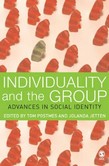
Social identity research has transformed psychology and the social sciences. Developed around intergroup relations, perspectives on social identity have now been applied fruitfully to a diverse array of topics and domains, including health, organizations and management, culture, politics and group dynamics. In many of these new areas, the focus has been on groups, but also very much on the autonomous individual. This has been an exciting development, and has prompted a rethinking of the relationship between personal identity and social identity - the issue of individuality in the group. This book brings together an international selection of prominent researchers at the forefront of this development. They reflect on this issue of individuality in the group, and on how thinking about social identity has changed. Together, these chapters chart a key development in the field: how social identity perspectives inform understanding of cohesion, unity and collective action, but also how they help us understand individuality, agency, autonomy, disagreement, and diversity within groups. This text is valuable to advanced undergraduate and postgraduate students studying social psychology where intergroup relations and group processes are a central component. Given its wider reach, however, it will also be of interest to those in cognate disciplines where social identity perspectives have application potential.
Social identity research has transformed psychology and the social sciences. Developed around intergroup relations, perspectives on social identity have now been applied fruitfully to a diverse array of topics and domains, including health, organizations and management, culture, politics and group dynamics. In many of these new areas, the focus has been on groups, but also very much on the autonomous individual. This has been an exciting development, and has prompted a rethinking of the relationship between personal identity and social identity - the issue of individuality in the group. This book brings together an international selection of prominent researchers at the forefront of this development. They reflect on this issue of individuality in the group, and on how thinking about social identity has changed. Together, these chapters chart a key development in the field: how social identity perspectives inform understanding of cohesion, unity and collective action, but also how they help us understand individuality, agency, autonomy, disagreement, and diversity within groups. This text is valuable to advanced undergraduate and postgraduate students studying social psychology where intergroup relations and group processes are a central component. Given its wider reach, however, it will also be of interest to those in cognate disciplines where social identity perspectives have application potential.