"Rojek's argument is a psychological one, although his message is political: global events build on people's needs to feel empowered and jointly engaged in the pursuit of a higher purpose; they allow a break from daily routines, provide an illusion of intimacy and social membership, and create a sense of self-validation and personal gratification. In short, participation in such events makes us feel good. At the same time, the real effect of global events seems to be the maintenance of global inequality and social injustice, as well as huge profits for the organizations involved in planning, commercializing and securing these happenings. In sketching out this palliative function of global events from the perspective of people's needs on the one hand, and unveiling their puppet masters backstage on the other, Rojek's book presents a compelling account of the role of organized events in modern society." - Organization Studies Events dominate our screens, our lives, and increasingly global geopolitics. Analysis of events and their management has remained rooted in leisure and management studies - until now. This break-through book provides an introduction to event management, while also situating events in questions of power and social control. Rojek powerfully argues that events are essential elements in corporate-state partnerships of 'invisible government' that have revived the romance of charity as to form illusory communities, while cloaking power imbalances and social inequalities. Events are moving politics from the old idea of 'the personal is political' to the new, more seductive notion that 'representation is resistance'. Wielding rich case studies from the World Cup and the Olympics to Live Aid, Burning Man and Mardi Gras, Rojek presents a dazzlingly original account of communication power, social ordering and control. It is essential reading in media & communication studies and across the social sciences.
"Rojek's argument is a psychological one, although his message is political: global events build on people's needs to feel empowered and jointly engaged in the pursuit of a higher purpose; they allow a break from daily routines, provide an illusion of intimacy and social membership, and create a sense of self-validation and personal gratification. In short, participation in such events makes us feel good. At the same time, the real effect of global events seems to be the maintenance of global inequality and social injustice, as well as huge profits for the organizations involved in planning, commercializing and securing these happenings. In sketching out this palliative function of global events from the perspective of people's needs on the one hand, and unveiling their puppet masters backstage on the other, Rojek's book presents a compelling account of the role of organized events in modern society." - Organization Studies Events dominate our screens, our lives, and increasingly global geopolitics. Analysis of events and their management has remained rooted in leisure and management studies - until now. This break-through book provides an introduction to event management, while also situating events in questions of power and social control. Rojek powerfully argues that events are essential elements in corporate-state partnerships of 'invisible government' that have revived the romance of charity as to form illusory communities, while cloaking power imbalances and social inequalities. Events are moving politics from the old idea of 'the personal is political' to the new, more seductive notion that 'representation is resistance'. Wielding rich case studies from the World Cup and the Olympics to Live Aid, Burning Man and Mardi Gras, Rojek presents a dazzlingly original account of communication power, social ordering and control. It is essential reading in media & communication studies and across the social sciences.
This collection focuses on social science perspectives of popular music since the late 1970s. Since then, social scientists like Simon Frith, Larry Grossberg, Will Straw, Paul Willis, Andy Bennett, Keith Negus, Howard Becker and Sarah Thornton have intensively examined the phenomenon of popular music from a social science and cultural studies perspective. This is part of the same move in the social and cultural sciences that has magnified Visual Culture, Celebrity Culture, Television Studies, Film Studies, Media & Communication, Fashion, and much else besides as legitimate subjects for academic enquiry. This move has become known as 'the Cultural Turn'. This collection launches from the Cultural Turn, but it will also incorporate key articles from the early social science of pop music. The aim will be to provide researchers and libraries with a four volume distillation of the best that has been thought and published in the academic study of popular music. Volume One: History and Theoretical Traditions provides the historical and theoretical anchor for the remainder of the set. Volume Two: Mode of Production brings together material that relates the production of popular music to technology, production, distribution and consumption, amongst others. Volume Three: Institutions of Popular Music examines the academic literature on the main social and 'cultural intermediaries' of popular music such as impression managers, new systems of music promotion and informal politics. Volume Four: Cultures and Subcultures of Popular Music guides the reader through music subcultures, audiences and globalization.
Leisure has always been associated with freedom, choice and flexibility. The week-end and vacations were celebrated as 'time off'. In his compelling new book, Chris Rojek turns this shibboleth on its head to demonstrate how leisure has become a form of labour. Modern men and women are required to be competent, relevant and credible, not only in the work place but with their mates, children, parents and communities. The requisite empathy for others, socially acceptable values and correct forms of self-presentation demand work. Much of this work is concentrated in non-work activity, compromising traditional connections between leisure and freedom. Ranging widely from an analysis of the inflated aspirations of the leisure society thesis to the culture of deception that permeates leisure choice, Rojek shows how leisure is inextricably linked to emotional labour and intelligence. It is now a school for life. In challenging the orthodox understandings of freedom and free time, The Labour of Leisure sets out an indispensable new approach to the meaning of leisure. Chris Rojek is Professor of Sociology and Culture at Brunel University. In 2003 he was awarded the Allen V. Sapora Award for outstanding achievement in the field of leisure studies.
Leisure has always been associated with freedom, choice and flexibility. The week-end and vacations were celebrated as 'time off'. In his compelling new book, Chris Rojek turns this shibboleth on its head to demonstrate how leisure has become a form of labour. Modern men and women are required to be competent, relevant and credible, not only in the work place but with their mates, children, parents and communities. The requisite empathy for others, socially acceptable values and correct forms of self-presentation demand work. Much of this work is concentrated in non-work activity, compromising traditional connections between leisure and freedom. Ranging widely from an analysis of the inflated aspirations of the leisure society thesis to the culture of deception that permeates leisure choice, Rojek shows how leisure is inextricably linked to emotional labour and intelligence. It is now a school for life. In challenging the orthodox understandings of freedom and free time, The Labour of Leisure sets out an indispensable new approach to the meaning of leisure. Chris Rojek is Professor of Sociology and Culture at Brunel University. In 2003 he was awarded the Allen V. Sapora Award for outstanding achievement in the field of leisure studies.
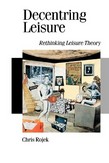
This book explores the meaning of leisure in the context of the key social formations of our time: capitalism, modernity and postmodernity- Rojek brings together the insights of Marxism, feminism, Weber, Elias, Simmel, Nietzsche and Baudrillard to produce a comprehensive survey - and rethinking - of leisure theory. At the same time he presents a radical critique of the traditional 'centring' of the concept of leisure on 'escape', 'freedom', 'choice'. In the first part, he describes the relations between capitalism and leisure, the meaning of free time for workers in a capitalist system, and the gendered nature of leisure. He then discusses the social construction of leisure under modernity and the main competing arguments - that it imprisons the individual and reinforces conformity or that it liberates people and releases their creativity. Finally, he examines postmodernity, the cultural condition which has radically changed the idea of leisure. Revealing how leisure practices have responded to living in a risk society, he shows that 'free' time becomes something very different when simulation and nostalgia lie at the heart of everyday life. Decentring Leisure will be essential reading for students and lecturers in leisure studies, cultural studies and social theory.
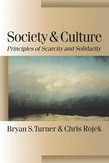
Society and Culture reclaims the classical heritage, provides a clear-eyed assessment of the promise of sociology in the 21st century and asks whether the `cultural turn' has made the study of society redundant. Sociologists have objected to the rise of cultural studies on the grounds that it produces cultural relativism and lacks a stable ......
'...an eclectic, essential resource for undergraduate and postgraduate students and those with an avid interest in the contemporary, greatly evolving, science of sociology, who need instruction and enlightenment in the cutting edge of theoretical discourses of society as a whole. Recommended' - Sociolog 'This is a wide-ranging and authoritative ......
This book explores the meaning of leisure in the context of the key social formations of our time: capitalism, modernity and postmodernity. Rojek brings together the insights of Marxism, feminism, Weber, Elias, Simmel, Nietzsche and Baudrillard to produce a comprehensive survey - and rethinking - of leisure theory. At the same time he presents a radical critique of the traditional 'centring' of the concept of leisure on 'escape', 'freedom', 'choice'. In the first part, he describes the relations between capitalism and leisure, the meaning of free time for workers in a capitalist system, and the gendered nature of leisure. He then discusses the social construction of leisure under modernity and the main competing arguments - that it imprisons the individual and reinforces conformity or that it liberates people and releases their creativity. Finally, he examines postmodernity, the cultural condition which has radically changed the idea of leisure. Revealing how leisure practices have responded to living in a risk society, he shows that 'free' time becomes something very different when simulation and nostalgia lie at the heart of everyday life. Decentring Leisure will be essential reading for students and lecturers in leisure studies, cultural studies and social theory.