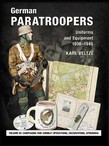
Volume 3: Campaigns and Combat Operations, Decorations, Ephemera
This three-volume work is the most comprehensive and detailed study of the World War II German paratrooper to date, providing in-depth examinations of nearly every uniform item - including all models of jump smocks - and equipment used from the airborne forces' establishment in the mid-1930s to May 1945.
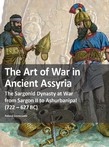
The Sargonid Dynasty at War from Sargon II to Ashurbanipal (722 - 627BC)
n the 7th century BC, the Assyrians carved out the first great empire in history under the leadership of a line of powerful kings from the Sargonid dynasty. Its power was based on a well-equipped and highly organized army led by the Great King himself.
For millennia, cavalry was the premier combat arm. Horses gave armies mobility and speed; often cavalry charges, either on the enemys flanks and into his rear or through his center, led to the decision in a battle.
This three-volume work is the most comprehensive and detailed study of the World War II German paratrooper to date, providing in-depth examinations of nearly every uniform item - including all models of jump smocks - and equipment used from the airborne forces' establishment in the mid-1930s to May 1945.
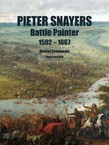
Born in Antwerp, Pieter Snayers was a fairly typical representative of this generation of painters. From a military historian's point of view, his works are considered particularly authentic. Many of his paintings showing sieges betray meticulous care in the depiction of the cities and fortresses concerned.
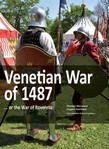
The 1487 Venetian War between the maritime, major power Venice and the alpine Archduchy of Tirol began from insignificant events and led to considerable political disruptions - especially in Tirol. The conflict is closely tied to Archduke Sigismund of Tirol's partially tragic, partially odd biography.
This book is the first volume of the final part of Ulrich Lehnarts costume history of the Middle Ages. It comprises the period between the end of the Middle Ages and early modern times. This era is particularly interesting in that both costume and armour underwent a gradual yet ultimately radical change. The changes in style in civilian and ......
Born in Antwerp, Pieter Snayers was a fairly typical representative of this generation of painters. From a military historian's point of view, his works are considered particularly authentic. Many of his paintings showing sieges betray meticulous care in the depiction of the cities and fortresses concerned.