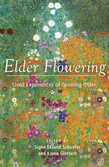
The "social art" of biography work has grown from the insights of Rudolf Steiners spiritual science—insights that have proved useful in identifying and exploring the archetypal rhythms and milestones of human life. The most well-known, even obvious, of these are the roughly seven-year rhythms of early childhood, childhood, and adolescence, ......
The Work of Bernhard Behrens: Four Essays with Current-Day Reviews
These essays, written just after World War II by a German economist who arrived in the United States in 1940, provide an unexpectedly helpful contribution to an understanding of our present moment, writ large.
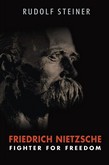
Immediately upon reading Nietzsche’s Beyond Good and Evil in 1889, Rudolf Steiner recognized a kindred spirit—a courageous fighter for the freedom of the human individuality who waged a fierce but unconscious battle against the unspiritual views of the age.
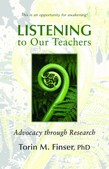
This book (first published as Silence Is Complicity) began life at an Antioch University Waldorf program for educators to introduce students to action research, a philosophy and methodology for transformative change through the process of taking action and doing research.
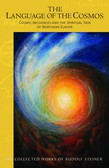
Cosmic Influences and the Spiritual Task of Northern Europe
11 lectures in various cities, Nov. 24–Dec. 31, 1921 (CW 209)
This previously untranslated volume in The Collected Works of Rudolf Steiner comprises eleven lectures given to members of the Anthroposophical Society in Norway, Germany, and Switzerland in November and December of 1921. In Rudolf Steiner’s biography, 1921 ......
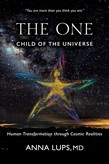
Dr. Anna Lups begins with a practical study of alchemical principles through her examination of a young child’s colorful drawings. As a Waldorf school physician, she began to realize that a “star child” had artistically conveyed a message worth investigating. Two decades later, she ......
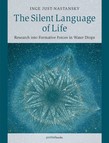
The research published here — conducted over the course of fifteen years by Inge Just-Nastansky — reveals, through extensive illustrations, a side of nature that otherwise remains hidden to us.
The water drop — that small, transparent vessel — leaves behind remarkable structures after drying, structures in which its “experiences” are ......
A Glimpse Into Gerard Wagner's Approach to Rudolf Steiner's Indications for Painting
This book offers insight into how Gerard Wagner developed his work on the basis of Rudolf Steiners indications for painting. Fundamental color experiments illustrate his methodical approach, while examples of his late work show the living, etheric quality he achieved in his watercolor painting.