Winner of the NASEN/TES Book Award for Teaching and Learning Award 2007! Includes CD-Rom 'Any setting will find this a useful, informative and accessible book' - Early Years Update ' I really enjoyed reviewing this book and will find it an excellent resource to share with the childminders with whom I work. I feel that it would benefit early years practitioners from all settings and would be a useful tool for tutors and students working at all levels'- National Childminding Association 'The straight forward step-by-step practical advice and guidance in this essential guide really helps to demystify exactly what is meant by inclusion . It is a vital and essential read for all those working with the 0-5 age range. It is an easy read that will leave you feeling more confident and well-informed about your role and it empowers you to help children with difficulties that you may have been reluctant to include in your setting' - Early Years Educator 'I really liked the way the book is set out with hands-on activities, checklists, discussion points and further reading after each chapter...[it] is full of brilliant suggestions and practical ideas to ensure all children can play and learn together. ..I will be recommending this book to early years practitioners and colleagues' - Nursery World 'A useful and informative book, written in a style that is easily understood and accessible to practitioners at different levels. I found the case studies and activities within the book helpful to practitioners in evaluating their own practice, and its references to further sources of support will be invaluable to the busy childcare professionals of today' - Natalie Chaplin, Head of Care, Education & Public Services, Suffolk College Are you looking for straight-forward practical advice on inclusion in the Pre-School? This first book in the Hands on Guides series provides step-by-step instruction on how to make your pre-school setting inclusive, and provides lots of helpful photocopiable resources, checklists and practical activities. Issues covered include: o advice on inclusive environments, play and planning to meet individual needs in 0 - 3 and Foundation stage settings o coverage of current legislation, such as the Disability Discrimination Act (DDA) and what it means for the pre-school practitioner; o quick-reference materials, for planning and auditing any early years setting; o a CD Rom with templates that can be customised to fit your needs. This book is essential for those working with Birth to Three Matters and the Foundation Stage curriculum, including pre-school practitioners, managers, advisory teachers, Area SENCOs, Inclusion Officers Tutors and Child Care and Education students and tutors.
Winner of the NASEN/TES Book Award for Teaching and Learning Award 2007! Includes CD-Rom 'Any setting will find this a useful, informative and accessible book' - Early Years Update ' I really enjoyed reviewing this book and will find it an excellent resource to share with the childminders with whom I work. I feel that it would benefit early years practitioners from all settings and would be a useful tool for tutors and students working at all levels'- National Childminding Association 'The straight forward step-by-step practical advice and guidance in this essential guide really helps to demystify exactly what is meant by inclusion . It is a vital and essential read for all those working with the 0-5 age range. It is an easy read that will leave you feeling more confident and well-informed about your role and it empowers you to help children with difficulties that you may have been reluctant to include in your setting' - Early Years Educator 'I really liked the way the book is set out with hands-on activities, checklists, discussion points and further reading after each chapter...[it] is full of brilliant suggestions and practical ideas to ensure all children can play and learn together. ..I will be recommending this book to early years practitioners and colleagues' - Nursery World 'A useful and informative book, written in a style that is easily understood and accessible to practitioners at different levels. I found the case studies and activities within the book helpful to practitioners in evaluating their own practice, and its references to further sources of support will be invaluable to the busy childcare professionals of today' - Natalie Chaplin, Head of Care, Education & Public Services, Suffolk College Are you looking for straight-forward practical advice on inclusion in the Pre-School? This first book in the Hands on Guides series provides step-by-step instruction on how to make your pre-school setting inclusive, and provides lots of helpful photocopiable resources, checklists and practical activities. Issues covered include: o advice on inclusive environments, play and planning to meet individual needs in 0 - 3 and Foundation stage settings o coverage of current legislation, such as the Disability Discrimination Act (DDA) and what it means for the pre-school practitioner; o quick-reference materials, for planning and auditing any early years setting; o a CD Rom with templates that can be customised to fit your needs. This book is essential for those working with Birth to Three Matters and the Foundation Stage curriculum, including pre-school practitioners, managers, advisory teachers, Area SENCOs, Inclusion Officers Tutors and Child Care and Education students and tutors.
A Practical Guide to Program Evaluation Planning: Theory and Case Examples provides a step-by-step process to guide evaluators in planning a comprehensive, yet feasible, program evaluation-from start to design-within any context. No book currently on the market delineate the required steps for preparing to conduct an evaluation. The co-editors of this text developed a model to guide the complex process of planning for program evaluations in a variety of settings. This model, entitled Evaluation Planning Incorporating Context (EPIC), builds on previous work by providing a practical, applied step-by-step process for planning a program evaluation in any setting. Contributing authors then use the EPIC model to describe an evaluation process that they followed in a variety of settings. The EPIC model and the case examples presented in this book provide evaluators with the conceptual tools and a framework for thinking about the pre-evaluation tasks that may be necessary for a successful, useful, and informative evaluation. Key Features Present new evaluation planning model that provides a step-by step process for how to plan for a program evaluation in any context Introduces students to the issues in planning for an evaluation within selected contexts using case studies Focuses on planning prior to design by providing practical guidance to plan an evaluation from the start, before a design can or has been determined Intended Audience This is a vital supplemental text for evaluation courses.
Teacher wellbeing, or a lack of it, is a major concern for the teaching profession. Research shows that there is a recruitment and retention crisis with over a third of the school, FE and HE profession expecting to leave by 2020. This is a practical guide that will help trainee teachers prepare for what is, undoubtedly, a demanding job. It supports new teachers to be aware of themselves and to understand the schools and teaching sector so they better anticipate pressures and find their own way forward. With solutions and strategies that can be taken into practice, this guide will help new and early career teachers establish that all-important work/life balance and avoid burn out.
Teacher wellbeing, or a lack of it, is a major concern for the teaching profession. Research shows that there is a recruitment and retention crisis with over a third of the school, FE and HE profession expecting to leave by 2020. This is a practical guide that will help trainee teachers prepare for what is, undoubtedly, a demanding job. It supports new teachers to be aware of themselves and to understand the schools and teaching sector so they better anticipate pressures and find their own way forward. With solutions and strategies that can be taken into practice, this guide will help new and early career teachers establish that all-important work/life balance and avoid burn out.
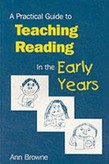
A Practical Guide to Teaching Reading in the Early Years is designed to help those who work with young c hildren, from nursery to the end of Key Stage 1, to implemen t the requirements of the National Literacy Strategy for rea ding. '
A Practical Guide to Teaching Reading in the Early Years is designed to help those who work with young children, from nursery to the end of Key Stage 1, to implement the requirements of the National Literacy Strategy for reading.'
This timely, thoughtful book provides a clear introduction to using panel data in research. It describes the different types of panel datasets commonly used for empirical analysis, and how to use them for cross sectional, panel, and event history analysis. Longhi and Nandi then guide the reader through the data management and estimation process, including the interpretation of the results and the preparation of the final output tables. Using existing data sets and structured as hands-on exercises, each chapter engages with practical issues associated with using data in research. These include: Data cleaning Data preparation Computation of descriptive statistics Using sample weights Choosing and implementing the right estimator Interpreting results Preparing final output tables Graphical representation Written by experienced authors this exciting textbook provides the practical tools needed to use panel data in research.
This timely, thoughtful book provides a clear introduction to using panel data in research. It describes the different types of panel datasets commonly used for empirical analysis, and how to use them for cross sectional, panel, and event history analysis. Longhi and Nandi then guide the reader through the data management and estimation process, including the interpretation of the results and the preparation of the final output tables. Using existing data sets and structured as hands-on exercises, each chapter engages with practical issues associated with using data in research. These include: Data cleaning Data preparation Computation of descriptive statistics Using sample weights Choosing and implementing the right estimator Interpreting results Preparing final output tables Graphical representation Written by experienced authors this exciting textbook provides the practical tools needed to use panel data in research.