The new social contexts formed via the Internet, and the new forms of data made available by the increasing use of diverse forms of computer mediated communication, have challenged researchers to develop approaches which do them justice. At the same time, there has been concern that established principles should be preserved, and that the connection between virtual research methods and more conventional research approaches should not be rejected out of hand. Despite a number of handbooks and textbooks published in recent years there is still a dearth of authoritative works which offer comprehensive coverage of the virtual research methods available to social researchers. In particular, there is none which thoroughly explores the full range of virtual research methods and their antecedents, and which explores the methodological and epistemological ramifications of their development. This multivolume reference collection fills this gap. The collection covers perspectives on the Internet as a social space; research models for the Internet and the skills, techniques and approaches needed to conduct research in a virtual environment; innovations in the research process and reflections on these innovations; and the ethical considerations to take into account when doing research on the Internet.
Representation, Memory, Time and Space in the Age of the Camera
Offering an overview of modern visual culture, this book explores the relationship between technology, society and identity which underpins contemporary "media culture". The author examines: the history of visual culture from Lumiere to virtual reality by way of photography, cinema and television; the social and political transformations over the ......
Representation, Memory, Time and Space in the Age of the Camera
Offering an overview of modern visual culture, this book explores the relationship between technology, society and identity which underpins contemporary "media culture". The author examines: the history of visual culture from Lumiere to virtual reality by way of photography, cinema and television; the social and political transformations over the ......
Includes CD-Rom Why are visual approaches to literacy important? Children's experience of texts is no longer limited to words on printed pages - their reading and writing worlds are formed in multimodal ways, combining different modes of communication, including speech or sound, still or moving images, writing and gesture. This book is a practical guide for teachers in making sense of multimodal approaches to teaching writing. The book covers topics such as: - The design of multimodal texts and the relationships between texts and images - How to build a supportive classroom environment for analysing visual and audiovisual texts, and how to teach about reading images - How to plan a teaching sequence leading to specific writing outcomes - Examples of teaching sequences for developing work on narrative, non-fiction and poetry - Formative and summative assessment of multimodal texts, providing levels for judging pupil development, and suggestions for moving pupils forward - How to write, review and carry out a whole school policy for teaching multimodal writing The book is accompanied by a CD, which contains a range of examples of children's multimodal work, along with electronic versions of the activities and photocopiable sheets from the book, and material designed for use with interactive whiteboards. It will be a valuable resource for primary teachers, literacy co-ordinators and students on initial teacher training courses.
Includes CD-Rom Why are visual approaches to literacy important? Children's experience of texts is no longer limited to words on printed pages - their reading and writing worlds are formed in multimodal ways, combining different modes of communication, including speech or sound, still or moving images, writing and gesture. This book is a practical guide for teachers in making sense of multimodal approaches to teaching writing. The book covers topics such as: - The design of multimodal texts and the relationships between texts and images - How to build a supportive classroom environment for analysing visual and audiovisual texts, and how to teach about reading images - How to plan a teaching sequence leading to specific writing outcomes - Examples of teaching sequences for developing work on narrative, non-fiction and poetry - Formative and summative assessment of multimodal texts, providing levels for judging pupil development, and suggestions for moving pupils forward - How to write, review and carry out a whole school policy for teaching multimodal writing The book is accompanied by a CD, which contains a range of examples of children's multimodal work, along with electronic versions of the activities and photocopiable sheets from the book, and material designed for use with interactive whiteboards. It will be a valuable resource for primary teachers, literacy co-ordinators and students on initial teacher training courses.
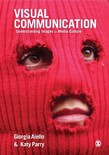
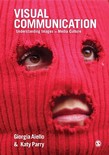
Visual Communication: Understanding Images in Media and Culture provides a theoretical and empirical toolkit to examine implications of mediated images. It explores a range of approaches to visual analysis, while also providing a hands-on guide to applying methods to students' own work. The book: Illustrates a range of perspectives, from content analysis and semiotics, to multimodal and critical discourse analysis Explores the centrality of images to issues of identity and representation, politics and activism, and commodities and consumption Brings theory to life with a host of original case studies, from celebrity videos on Youtube and civil unrest on Twitter, to the lifestyle branding of Vice Media and Getty Images Shows students how to combine approaches and methods to best suit their own research questions and projects An invaluable guide to analysing contemporary media images, this is essential reading for students and researchers of visual communication and visual culture.
Visual Communication: Understanding Images in Media and Culture provides a theoretical and empirical toolkit to examine implications of mediated images. It explores a range of approaches to visual analysis, while also providing a hands-on guide to applying methods to students' own work. The book: Illustrates a range of perspectives, from content analysis and semiotics, to multimodal and critical discourse analysis Explores the centrality of images to issues of identity and representation, politics and activism, and commodities and consumption Brings theory to life with a host of original case studies, from celebrity videos on Youtube and civil unrest on Twitter, to the lifestyle branding of Vice Media and Getty Images Shows students how to combine approaches and methods to best suit their own research questions and projects An invaluable guide to analysing contemporary media images, this is essential reading for students and researchers of visual communication and visual culture.
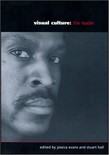
A primary resource of key statements on photographic meaning, representation and visual culture. The editors combine classic and contemporary essays from a range of scholars including Barthes, Sontag, Baudrillard and Mulvey. The reader is divided into three parts, which present the culture of the image and the making of meaning; the history and ......
A primary resource of key statements on photographic meaning, representation and visual culture. The editors combine classic and contemporary essays from a range of scholars including Barthes, Sontag, Baudrillard and Mulvey. The reader is divided into three parts, which present the culture of the image and the making of meaning; the history and ......