`I particularly enjoyed Judith Roden's chapter "Young Children Are Natural Scientists" especially her thoughts on children's drawings, which puncture some popular assumptions' - Times Educational Supplement, Friday Magazine `This expertly argued and fascinating book seeks to redress the balance; it places the child firmly at the centre of the educational process and examines in detail the many and varied factors (such as health and physical development, play, stress, and early intervention) which affect the way in which the young child learns and develops' - Who Minds `Tricia David, an internationally recognized expert in early years education, has brought together 11 tutors from Canterbury Christ Church University College to "encourage debate and disagreement".... It has... some absorbing and helpful contributions which both bring forward the debate in early years education and also may cause readers to reappraise their own practice, possibly as a result of disagreeing with one or other contributors' - International Journal of Early Years Education Young Children Learning brings together current thinking on young children's learning, with ideas about the curriculum for children aged 0 to eight years old. Areas covered in this book include: play; health and physical development; early intervention; stress; children understanding their worlds; bilingualism; children's spiritual development; national identity; young children as natural scientists; assessing learning; the needs of parents, children and teachers; and childhood in changing societies. Written by experienced practitioners from the centre for International Studies in early childhood, Young Children Learning shows that in the earliest years of childhood, all children should experience the delight which can be part of effective pedagogy - pedagogy which takes account of the child's individuality and development, in the context of changing socio-cultural constructions of childhood.
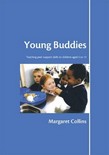
Teaching Peer Support Skills to Children Aged 6 to 11
Peer buddy systems have been demonstrated as very successful with older students. Positive effects are recognized for the individuals befriended and also for the whole community. Margaret has used her vast experience with younger children to develop a programme which achieves these outcomes at the stage when they are learning the skills of friendship and cooperation. Using her popular style of differentiating activities and teaching for two ages groups, 6-8 and 9-11, Margaret has provided an exciting, innovative and challenging programme which enhances the citizenship curriculum and the atmosphere of the school.
You've completed your research and want to publish it in a peer-reviewed journal. Author Gilbert C. Gee is here to help, sharing what he learned as a writer, reviewer, and Editor-in-Chief, and calling on other journal editors to offer their advice. You Can Publish Your Journal Article! will not only help you write your paper, but more importantly, be more likely to succeed in peer review.
Getting the right answers in maths is only half the problem. Understanding why what you're doing works is the part that often stumps students and teachers alike. The essential guide for mathematics teachers and those training to teach, Yes, but why? answers all your questions, and sheds light on the hidden connections between everything in mathematics at school. This second edition includes: * A new 'Test yourself' feature in every chapter * More coverage of the four operations * Enhanced discussion of fractions and proportionality * Downloadable figures for use in the classroom
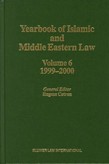
The "Yearbook of Islamic and Middle Eastern Law" provides a commentary on and analysis of emerging issues in a field of global significance. The latest volume includes: essays on the Palestinian "right of return", the Lockerbie trial, the Islamic law principle of "just exchange", and special issues in Ismaili, Saudi, and UAE law; ......
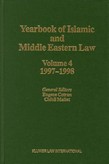
Practitioners and academics dealing with the Middle East can turn to the "Yearbook of Islamic and Middle Eastern Law" for an instant source of information on the developments over an entire year in the region. The Yearbook covers Islamic and non-Islamic legal subjects, including the laws themselves, of some 20 Arab and other Islamic countries. The ......
Practitioners and academics dealing with the Middle East can turn to the Yearbook of Islamic and Middle Eastern Law for an instant source of information on the developments over an entire year in the region. The Yearbook covers Islamic and non-Islamic legal subjects, including the laws themselves, of some twenty Arab and other Islamic countries. ......
The third volume in this yearbook, this work provides an up-to-date source of reference on Islamic law and modern Middle Eastern legal systems, both individually and comparatively. The text includes articles covering such issues as: Palestinian citizenship; prospects for Muslim law in South Africa; the status of Muslim women within marriages; and ......
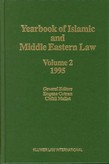
This reference on all the legal developments occurring throughout the region during 1995 contains articles on a broad range of topics, from mut'a al Talaq under Egyptian and Jordanian law to arbitration law in Kuwait and water law in Morocco. Also included are surveys of the legal and judicial systems of Pakistan, Turkey and Malaysia; as well as ......