We are an independent publisher and registered charity (non-profit organisation) dedicated to making available the work of Rudolf Steiner in English translation. We care a great deal about the content of our books and have hundreds of titles available – as printed books, ebooks and in audio formats.
Rudolf Steiner (1861-1925) called his spiritual philosophy “anthroposophy”, meaning “wisdom of the human being”. As a highly developed seer, he based his work on direct knowledge and perception of spiritual dimensions. He initiated a modern and universal “science of spirit”, accessible to anyone willing to exercise clear and unprejudiced thinking.
From his spiritual investigations Steiner provided suggestions for the renewal of many activities, including education (both general and special), agriculture, medicine, economics, architecture, science, philosophy, religion and the arts. Today there are thousands of schools, clinics, farms and other organizations involved in practical work based on his principles.
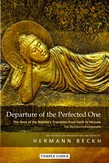
The personality who received the Christ Being into himself in his thirtieth year is a complex entelechy. Only on the basis of the Akashic Record can an accurate view be gained as to why the life of Jesus is so diversely presented in the various Gospels... - Rudolf Steiner
Those involved with this illness professionally or as a relative can learn much from this study, which motivates them to a deepening of anthroposophy. They will also be inspired by how the author brings the illness into the realm of the living impulse of Christ.' Michaela GlöcklerDementia, a broad category of brain diseases including ......
The Reality of the Demonic Threat and the Doppelganger in the Light of Anthroposophy - Demonology, Christology and Medicine
Are Thoresen perceives demons and other spiritual beings as clearly as we see each other. He sees the demons that cause disease as well as the beings associated with medicinal plants and other substances that can promote health. He has witnessed how demons of disease leave the bodies of the sick and enter the healthy, thus causing contagion. ......
An Investigation into the Traditions That Christ Visited Cornwall and Somerset
The many traditions and legends of Jesus's travels to Britain are deeply impressed into our culture, thanks particularly to the famous allusion by William Blake. These tales tell that, while still a boy, Jesus accompanied his uncle Joseph of Arimathea - an importer of metals - on expeditions to Cornwall to engage in the tin trade. Later, it is ......
Using Technology Consciously in Your Life and Work, 101 Ways to Survive and Thrive in a Hyperconnected World
How many times do you check something on the internet but find you are drifting aimlessly from one link to another? If you cant not answer the phone when it rings, and you spend hours a week on social media, and you read your texts instead of kissing your loved one goodnight, and you dont give your kids proper attention because you just have to
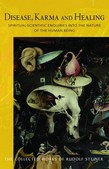
Spiritual-Scientific Enquiries into the Nature of the Human Being
Today, illness is almost universally regarded as either a nuisance or a grave misfortune. In contrast to this conventional thinking, Rudolf Steiner places the suffering caused by disease in a broad vista that includes an understanding of karma and personal metamorphosis. Illness comes to expression in the physical body, but mostly does not ......
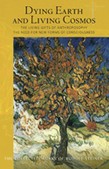
The Living Gifts of Anthroposophy - The Need for New Forms of Consciousness
These authoritative lectures, delivered during a period of deep crisis and conflict in world history, present a comprehensive spiritual teaching for contemporary humanity. Despite the raging world war, Rudolf Steiner was still actively touring Central Europe whilst simultaneously completing work on his architectural masterpiece, the first ......
Rudolf Steiner, the often undervalued, multifaceted genius of modern times, contributed much to the regeneration of culture. In addition to his philosophical teachings, he provided ideas for the development of many practical activities, including education - both general and special - agriculture, medicine, economics, architecture, science, ......