Written by the author who has been a well-known circus ringmaster for most of his adult life, and is also the first ordained Assembly of God minister to leave the movement, this book reveals the inner workings of this sect.
Parapsychology texts contain many references to Czechoslovakian clairvoyant, Pavel Stepanek. Stepanek's tested "ESP" success rate of over 60 per cent caused the 1970 edition of the "Guinness Book of World Records" to proclaim him "the best clairvoyant ever tested". The science writer disagrees.
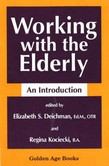
A sourcebook placing an emphasis on maintaining the integrity, independence, and individuality of older persons. It includes questions for discussion, and bibliographies. It features contributors including specialists in various fields. It is intended for those who serve the older population - and those considering the field of ageing.
Combines the findings of split-brain research and the mind's symbolic processes to examine the implications for understanding subjective experience of the religious and the sacred.
Emphasises on maintaining the integrity, independence, and individuality of older persons. This book stresses the importance of communicating effectively, understanding the needs of older persons, and developing trust at various levels of service. It includes contributors from the fields of medicine, therapy, communication, psychology, and others.
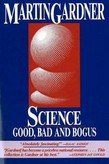
Examines the variety of pseudoscientific conjectures that dominate the media. With an emphasis on parapsychology and occultism, this collection addresses the evidence put forth to support claims of ESP, psychokinesis, faith healing, and other pseudoscience.
In the genre of Christian philosophers, Spinoza presents a geometric argument for the necessary existence of God as the one absolute substance underlying all other substance. From the necessity of God's existance, he derives the laws of existence, those of nature, and the ethical principles animating human conduct. In this sweeping volume that ......
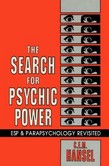
For centuries both primitive and sophisticated societies have been spellbound by persons who claim to have 'psychic' power. If extrasensory perception(ESP) is to be scientifically established there must be proof in the form of replicable experiments. This book recounts the scientific community's efforts to provide, test, and analyze such evidence.
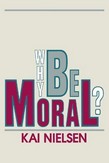
Why be moral? This book offers an answer to this question - a question that reaches in to grasp at the very heart of ethics itself. It also shows us that skirmishes among supporters of specific moral principles require a different sort of resolution than those that occur between groups of ethical principles.