Deliberate practice exercises provide trainees and students an opportunity to build competence in essential interpersonal therapy skills while developing their own personal therapeutic style. These exercises present role-playing scenarios in which two trainees act as a client and a clinician, switching back and forth under the guidance of a ......
This book presents a holistic approach to treating patients with personality disorders that seeks to inspire psychotherapists and encourage innovation. Focusing on core mechanisms of change that span different therapeutic approaches, this book invites clinicians and researchers to join a dialogue with the authors, as they examine personality ......
An Integrative Approach to Reducing Interpersonal Distress
Introduces mental health providers to focused brief group therapy, and shows how how it can help reduce a patient's distress from loneliness and disconnection. Blending the art and science of therapy, this semi-structured model enables therapists to improve their client's existing interpersonal relationships, or develop new ones.
In transdiagnostic emotion-focused therapy (EFT-T), therapists target deep core emotional vulnerability-- sadness/loneliness, shame, and fear/terror-that underlie the diagnostic cluster depression, anxiety, and related disorders, such as posttraumatic stress disorder and obsessive-compulsive disorder. Part I presents the theoretical underpinnings ......
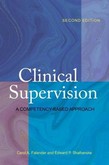
Demonstrates the clinical supervisor's central role in orienting and socializing graduate students, interns, and postdoctoral fellows into psychology as a profession. The authors promote a competency-based approach to supervision, wherein supervisors establish expectations and standards.
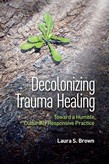
This book offers a critical examination of the field of trauma work using a decolonial lens, recentering narratives and approaches to healing in a more inclusive, culturally responsive way than that offered by dominant Eurocentric approaches. As trauma is a universal experience, a colonized paradigm for responding to trauma re-introduces ......
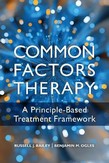
The integrative framework in this book synthesizes common factors research into a comprehensive set of guidelines for improving clinical practice and training. The five common factors reviewed are the therapeutic relationship, motivation, insight, self-efficacy, and corrective experiencing.
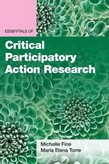
This book describes a method in which researchers commit to research WITH, not ON, members of marginalized communities in order to challenge and transform conditions of social injustice.
Shows how forgiveness oriented Emotion-Focused Therapy (EFT) helps individuals and couples process distressing negative emotions and transform them by accessing internal resources of strength and self compassion. The book offers step-by-step guides for conducting EFT and EFT for couples, along with analyses of extensive clinical case material.