Founded in 1956, Penn State University Press publishes rigorously reviewed, high-quality works of scholarship and books of regional and contemporary interest, with a focus on the humanities and social sciences. The publishing arm of the Pennsylvania State University and a division of the Penn State University Libraries, the Press promotes the advance of scholarship by disseminating knowledge—new information, interpretations, methods of analysis—widely in books, journals, and digital publications.
Scholarly publishing has faced monumental challenges over the past few decades. The Press takes its place among those institutions moving the enterprise forward. Its innovative projects continue to identify and embrace the technological advances and business models that ensure scholarly publishing will remain feasible, and widely accessible, well into the future.
As Dutch merchants became drivers of the transatlantic slavery business in the seventeenth century, Dutch art increasingly used Blackness to signal slavery and servitude. In this brilliant and pathbreaking work, Angela Vanhaelen proposes new ways of looking at Dutch paintings that do not equate Blackness with enslavement. Vanhaelen reframes the ......
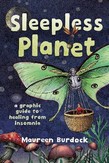
An integrative guide to better sleep in a hyperactive world. Insomnia is a sleep disorder that affects roughly one in four people in the industrialized world. Typical treatments are often ineffective and have undesirable side effects. For those of us yearning for a restful night's sleep in a world that never stops turning, it's hard to know how ......
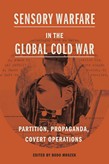
The longest political conflict of the twentieth century, the Cold War, was carried out on the human senses-and through them. Largely conducted through nonlethal methods, it was a war of competing cultures, politics, and covert operations. While propaganda reached targets through vision and hearing, sensory warfare also exploited taste, touch, ......
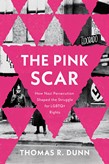
How Nazi Persecution Shaped the Struggle for LGBTQ+ Rights
The Third Reich subjected some 100,000 individuals to a pernicious anti-homosexual campaign that included censorship, surveillance, medical experimentation, and death. Credible scholarship suggests that as many as 15,000 were interned in concentration camps, though the actual names and numbers of all those who suffered and died will never be ......
Material Thinking in the Early Modern Spanish World
At the turn of the seventeenth century in Spain and Mexico, people were fascinated by iridescence. In paintings, portraits, and prints, artists stretched the capacities of conventional media to depict shimmering hues. Some artists put iridescent material right into their work-for example, Indigenous artists in central and western Mexico who ......
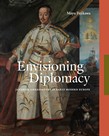
In the late sixteenth and early seventeenth centuries, Japan sent its first diplomatic delegations to visit the popes and dignitaries of Europe. European artists portrayed these historic ambassadors-the Tensho embassy (1582-90) and the Keicho embassy (1613-20)-in numerous oil paintings, frescoes, drawings, and prints. Envisioning Diplomacy ......
How is it that the prolific nineteenth-century sculptor Moses Jacob Ezekiel is largely forgotten today? Ezekiel was the first renowned Jewish American artist and one of the most popular artist-celebrities of his day. In terms of drama his life story rivals Alexander Hamilton's. Ezekiel fought for the Confederacy at the Battle of New Market as a ......
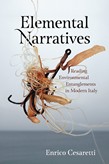
Reading Environmental Entanglements in Modern Italy
Over the past century, the Italian landscape has undergone exceedingly rapid transformations, shifting from a mostly rural environment to a decidedly modern world. This changing landscape is endowed with a narrative agency that transforms how we understand our surroundings. Situated at the juncture of Italian studies and ecocriticism and following ......