Founded in 1956, Penn State University Press publishes rigorously reviewed, high-quality works of scholarship and books of regional and contemporary interest, with a focus on the humanities and social sciences. The publishing arm of the Pennsylvania State University and a division of the Penn State University Libraries, the Press promotes the advance of scholarship by disseminating knowledge—new information, interpretations, methods of analysis—widely in books, journals, and digital publications.
Scholarly publishing has faced monumental challenges over the past few decades. The Press takes its place among those institutions moving the enterprise forward. Its innovative projects continue to identify and embrace the technological advances and business models that ensure scholarly publishing will remain feasible, and widely accessible, well into the future.
Techne's Paradox - a frequent theme in science fiction - is the commonplace belief that technology has both the potential to annihilate humanity and to preserve it. Advocating Weapons, War, and Terrorism looks at how this paradox applies to some of the most dangerous of technologies: population bombs, dynamite bombs, ......
Examines commonplace conflicting beliefs that technology will either annihilate humanity or preserve humanity from annihilation. Argues that the paradoxical capacities of weapons influence how humanity understands violent ......
In recent decades, the study of Biblical Hebrew has profited enormously from the application of methodologies derived from general linguistics. During the 16th World Congress of Jewish Studies, Adina Moshavi and Tania Notarius organized sessions devoted to exploring new developments in Biblical Hebrew linguistics, bringing together many of the ......
Painting has long dominated discussions of Netherlandish art. Yet in the sixteenth century sculpture was held in considerably higher regard than painting, especially in foreign lands. This beautifully illustrated book is the first comprehensive study of sixteenth-century Netherlandish sculpture, and it opens an important window onto the works and ......
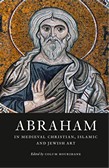
Abraham, son of Terah or Azar and husband of Sarah, is one of the pivotal figures of the Old Testament and is generally seen as the founder of the Christian, Jewish, and Muslim faiths. He was a rich source of inspiration in all three faiths for artists of the medieval period. His life narrative from birth to death is richly recorded in a ......
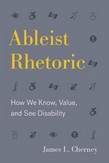
Examines the rhetorical practices that generate and sustain discrimination against disabled people. Demonstrates how ableist values, knowledge, and ways of seeing pervade Western culture and influence social institutions such as law, sport, and religion.
Ableism, a form of discrimination that elevates “able” bodies over those perceived as less capable, remains one of the most widespread areas of systematic and explicit discrimination in Western culture. Yet, in contrast to the substantial body of scholarly work on racism, sexism, classism, and heterosexism, ableism remains ......
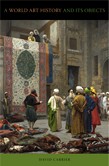
Explores the question of how an art history of all cultures could be written or if it is even possible to do so. Examines the political and moral issues raised by the consideration of a multicultural art history.
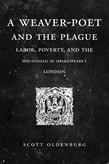
Labor, Poverty, and the Household in Shakespeare's London
William Muggins, an impoverished but highly literate weaver-poet, lived and wrote in London at the turn of the seventeenth century, when few of his contemporaries could even read. A Weaver-Poet and the Plague's microhistorical approach uses Muggins's life and writing, in which he articulates a radical vision of a commonwealth founded on labor and ......