A publisher of original scholarship since its founding in 1916, New York University Press is a department of the New York University Division of Libraries. Working across the humanities and social sciences, NYU Press has award-winning lists in sociology, law, cultural and American studies, religion, history, anthropology, politics, criminology, media and communication, literary studies, and psychology. Several key themes or topics, especially race, ethnicity, gender, and youth studies, unify all our publishing disciplines.
Making common cause with the best and the brightest, the great and the good, NYU Press aspires to nothing less than the transformation of the intellectual and cultural landscape. Infused with the conviction that the ideas of the academy matter, we foster knowledge that resonates within and beyond the walls of the university. If the university is the public square for intellectual debate, NYU Press is its soapbox, offering original thinkers a forum for the written word. Our authors think, teach, and contend; NYU Press crafts, publishes and disseminates.
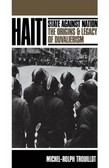
In the euphoria that followed the departure of Haiti's hated dictator, Jean-Claude Duvalier, most Haitian and foreign analysts treated the regimes of the two Duvaliers, father and son, as a historical nightmare created by the malevolent minds of the leaders and their supporters. Yet the crisis, economic and political, that faces this small ......
Marxist and Labour Theories of Nationalism to 1917
Nationalism and Socialism is a study in the history of Marxian ideas; but it is also an attempt to show how the ideas are related to the society from which they sprang, and how the changes in social relations were reflected in the emergence of a whole new formulation of nationalist theory. Horace Davis brings together, for the first time in ......
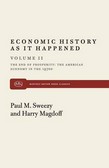
This is the second in the series of four collections of essays in which Paul M. Sweezy and Harry Magdoff, the editors of Monthly Review, set out as it took place the development of U.S. and global capitalism from the late 1960s to the "financial explosion" age of the early 1990s and after. This second set of essays constitute in their totality a ......
Poet and essayist Fawaz Turki begins his search for answers in the hallways of the 1983 Palestine National Council meeting in Algiers. He then recalls his family's flight into Lebanon when he was eight, childhood in a refugee camp and the streets of Beirut, and years spent in Australia, France, and the United States in search of his identity, both ......
This introduction to socialist thought is by two men perhaps better qualified than any other Americans to have written it. Leo Huberman and Paul Sweezy, founding editors and publishers of the independent socialist magazine Monthly Review, built an impressive reputation as keen observers, acute analysts, and lucid writers on the world and domestic ......