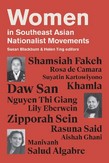
Books on Southeast Asian nationalist movements make very little - if any - mention of women in their ranks. Biographical studies of politically active women in Southeast Asia are also rare. Women in Southeast Asian Nationalist Movements makes a strong case for the significance of women's involvement in nationalist movements and for the diverse ......
Neighbourhood, State and Economy in Indonesia's City of Struggle
Surabaya, 1945-2010 presents the recent history of one of Indonesia's great port cities as viewed from a crowded low-income neighbourhood (kampung) called Dinoyo. By following the lives of Dinoyo residents over three generations, it provides a new perspective on landmark moments in the country's modern history, including the war for independence, ......
'Development' promises higher incomes, better livelihoods, social justice, and emancipation, but decades of good intentions have left hill communities in Northern Thailand with high rates of drug addiction and poverty, and a loss of traditional knowledge and values. A former volunteer and development specialist who spent much of her childhood in ......
Prahus, Timber and Illegality on the Margins of the Indonesian State
The Madurese are one of the great maritime and trading peoples of the Indonesian Archipelago. This remarkable study takes readers into the coastal villages of Madura, where the distinctive traditional vessels were powered by sail until the late twentieth century. It examines informal-sector economic niches, notably the cattle, salt and timber ......
The extended metropolitan regions of Southeast Asia are the dynamic cores of their national economies and societies and the frontiers of accelerating globalization. ""The City in Southeast Asia"" explores ways of moving beyond outmoded paradigms of the Third World City or a Southeast Asian city 'type'. It begins by contrasting the acknowledged ......
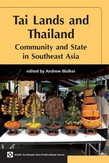
Studies of the Tai world often treat 'state' and 'community' as polar opposites: the state produces administrative uniformity and commercialisation, while community sustains tradition, local knowledge and subsistence economy. This assumption leads to the conclusion that the traditional community is undermined by the modern forces of state ......
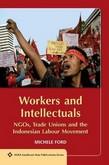
NGOs, Trade Unions and the Indonesian Labour Movement
After decades of repression, Indonesia's independent labour movement re-emerged in the 1990s, led by the NGO activists and students who organised industrial workers and spoke on their behalf. Worker-led trade unions returned to centre stage in 1998 when Suharto's authoritarian regime crumbled, and labour NGO activists and their organisations ......
The nature of community in urban Java changed dramatically during the economic and political transition that followed the fall of the Soeharto regime in Indonesia, although the community continues to provide a rallying point for urban low-income residents in the off-street neighbourhoods (kampong) in Yogyakarta and in other cities of Java. Under ......
During the dramatic economic and social transformation of late twentieth-century Indonesia, theatre performances in Central Java featured a familiar cast of rulers, nobles, clown servants and ordinary people. However, these presentations were not a repetition of age-old cultural 'traditions'. Instead, by stretching the framework of Javanese ......