The countries that make up Southeast Asia are seeing an incredible resurgence in their economic power. Over the past fifty years, their combined wealth has reached the same level as the United Kingdom and, taken together, they are on track to become the fifth-largest world economy. But that stability and success has drawn the attention of the ......
What is the modern in Southeast Asia's architecture and how do we approach its study critically? This pathbreaking multidisciplinary volume is the first critical survey of Southeast Asia's modern architecture. It looks at the challenges of studying this complex history through the conceptual frameworks of translation, epistemology, and power. ......
Historians rely on Singapore's strategic position to explain its great success as a royal trading port in the 14th century, and as a British colony after 1819. What, then, accounts for the many centuries when it seemed not to thrive, and was seen in the words of John Crawfurd as "only the occasional resort of pirates"? This seeming paradox sits ......
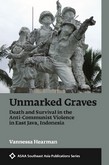
Death and Survival in the Anti-Communist Violence in East Java, Indonesia
The wave of anti-communist violence that swept across Indonesia in 1965-66 produced a particularly high death toll in East Java. It also transformed the lives of hundreds of thousands of survivors, who faced decades of persecution, imprisonment and violence. In this book, Vannessa Hearman examines the human cost and the community impact of the ......
Mangkunagara I (1726-95) was one of the most flamboyant figures of 18th-century Java. A charismatic rebel from 1740 to 1757 and one of the foremost military commanders of his age, he won the loyalty of many followers. He was also a devout Muslim of the Mystic Synthesis style, a devotee of Javanese culture and a lover of beautiful women and Dutch ......
The golden age of Malay film in the 1950s and 1960s was the product of a musical and cultural cosmopolitanism in the service of a nation-making process based on ideas of Malay ethnonationalism, initially fluid, increasingly homogenised over time. The commercial films of the period, and in particular their film music, from national cultural icons ......
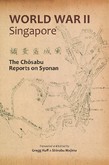
For forty-four months during World War II, the Japanese occupied Singapore, renaming it Syonan and setting out to drastically change life on the island. As part of the occupation, the Japanese created a research bureau, the Chosabu, to study occupied Singapore. The bureau's detailed reports on the economy covered prices, wages, currency, ......
Using Thailand as a case study, Ross King examines the role of place in the formation of identity through memory. Employing the idea of French historian Pierre Nora that because we no longer live in environments of memory-places where the past is still vividly alive-we compensate by attaching ourselves to sites of memory, King explores whether ......
The British military failure against the Japanese invasion of Singapore in 1942 is a well-documented and closely examined episode. But far less attention has been paid to the role of the colonial governor and his staff during this period, an oversight Ronald McCrum corrects with this insightful history. As McCrum shows, the failure of the civil ......