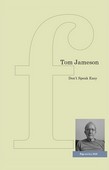
Don't Speak Easy is Tom Jameson's debut pamphlet. Its scope ranges from a childhood spent in the immediate wake of the Second World War to a projected future where death provides the opportunity to spin back to the very beginning of life at breakneck speed. Jameson's skill as a poet and storyteller never loses sight of the fine grain of human ......
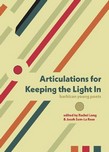
ARTICULATIONS FOR KEEPING THE LIGHT IN is an anthology of the work of the 2022 Barbican Young Poets (BYP) cohort. In a dazzling array of poetics and forms, ranging from prayer to the personal dynamics of light, these poems continue to extend the legacy of the decade-old BYP programme and showcase the potency and integrity of contemporary poetry.
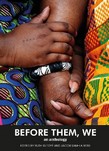
BEFORE THEM, WE explores the lives of migrant elders from Africa, unpacking the intimate details of their lives - their loves, obsessions and motivations - before the families they went on to establish. A collaborative act of sharing by poets of African descent, BEFORE THEM, WE is a revealing meditation on how we engage with the practice of ......
Written originally in Me'phaa, First Rain is a selection of poems that emerged from the poet responding to the death of his grandmother who declared to him in 2005: I will die in the days when the first rains come. The work mourns both the loss of a grandmother, and the fading away (like her sight in later life) of a culture and language that hold ......
After over a decade working as a musician under the name Kae Sun, Kwaku Darko-Mensah Jnr. makes a full-blooded return to poetry. His debut Flood Season explores diasporic belonging, the tensions between who we are and the cliches that surround our nation states, and hybridity.
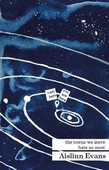
When twins Afya and Aftab, along with their adopted brother Khaled, leave the shelter of a hidden valley, they are astonished by the bustle and noise of the outside world. But beneath this chaos is an order more threatening than bedlam. An army of shadows gathers, looking to break free from the navel of the world, where they have been subdued for ......
Humaning, Laurie Ogden's striking debut, moves through a storm of conflicting notions of womanhood, the body, and difference. Sometimes open and playful, sometimes dark and surreal, the poems offer up self-authorship and anthropomorphism as tools for transformation in the aftermath of trauma.
In Say, Sarala Estruch explores the limits of language in the face of overwhelming loss and attempts to forge a language with which to probe subjects that still remain largely taboo. In doing so, Say casts a slant light on the scars our ancestors carry, both those we inherit and those we choose to leave behind.