A 10-Month Practice-Based Professional Learning Guide, Grades K-5
A yearlong learning adventure designed to help you build a vibrant math community A powerful math community is an active group of educators, students, and families, alive with positive energy, efficacy, and a passion for mathematics. Students, teachers, and leaders see themselves and each other as mathematically capable and experience mathematics as a joyful activity. Power Up Your Math Community is a hands-on, 10-month guide designed to help you and your school maximize your students' math learning and strengthen your mathematics teaching and learning community. Each chapter offers a month's worth of practice-based professional learning focused on a desired math habit alongside parallel math problems and learning activities for teachers to use themselves and with students. This format allows educators to work together to improve math teaching and learning across a school year, building a strong foundation for students' mathematical proficiency, identity, and agency. The book ignites solutions and advocates for rigorous and joyful mathematics instruction for everyone-including school leaders, teachers, students, and their families. Authors Holly Burwell and Sue Chapman provide educators with a detailed roadmap for creating a positive and effective math community that supports all students' mathematical learning by Offering guidance on building a math community with chapter vignettes and prompts such as Mathematical Me, Let's Do Some Math, Since We Last Met, Let's Try It Out, Math Talks, Manipulatives and Models Matter, Game Time, and more Emphasizing an assets-based approach to teaching math that recognizes the unique strengths and experiences of each student Providing strategies for promoting growth mindset in math and equity and inclusion in math education Focusing on both classroom-level and building-level improvement as well as offering support for teachers, instructional coaches, principals, and district leaders Power Up Your Math Community will inspire you to reimagine the way you teach math and empower you with the tools to make a lasting impact on your students' mathematical understanding. So, get ready to power up your math community and watch as your students thrive in their mathematical journey!
Sometimes the hardest thing about teaching isn't the students-it's the other teachers Even educators who love what they do may find that their colleagues add stress to their already demanding jobs. Workplace bullying, cliques, fear-based leadership, and collective burnout are just some of the workplace dynamics that can make our jobs harder and diminish our ability to support students. Psychological safety is the belief that you will not be humiliated, punished, or retaliated against for asking questions, expressing concerns, or trying new strategies-and it is essential for building teacher self and collective efficacy. The Other Teachers provides strategies to nurture psychologically safe relationships at work and create a more inclusive, supportive environment for all. Inside, you'll find: Strategies, tools, and reflection questions to help you identify the challenges at your school Eye-opening stories based on the experiences of real educators in a variety of roles and settings The stages of psychological safety and insights into the ways our relationships, teams, and school cultures can foster belonging and trust Research supporting the need for psychologically safe workplaces-not just for our benefit, but for our students' How we treat one another at work impacts our well-being as well as our career satisfaction and performance. Whether you work in a school with a toxic workplace culture or one that is highly supportive, all schools can benefit from intentionally cultivating psychological safety among staff.
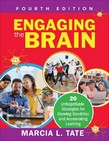
20 Unforgettable Strategies for Growing Dendrites and Accelerating Learning
Create unforgettable learning experiences for your students What can you do when students would rather socialize than pay attention to your lesson? When students appear to lack motivation, how do teachers ensure that learning sticks? How can you best respond to learning loss caused by the pandemic? In this new edition of Marcia Tate's wildly bestselling book, 20 field-tested, brain-compatible instructional strategies designed to maximize memory are supported by new classroom applications and research. In each chapter devoted to an individual strategy, you'll discover: The latest research on how the brain benefits when the strategy is used How the strategy engages all students and addresses common behavior problems Sample classroom activities for various grade levels that teachers can implement immediately Action plans for incorporating each strategy to accelerate learning When students actively engage in learning, they stand a much better chance of retaining what we want them to know. As students face setbacks and learning gaps, it's imperative that we quickly bridge these divides by teaching them in the way their brains learn best.
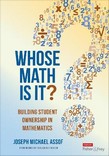
Foster Confidence and Ownership in Every Math Student When it comes to math, does it feel like some students embrace problem-solving with agency and ownership while others are confused-or simply along for the ride? How do educators bridge that divide to develop competence, confidence, and ownership in every student? The answers lie in establishing clear and effective measures for success. Steeped in the principles of success criteria, Whose Math Is It? provides educators with everything they need to create a classroom environment where students feel empowered to step up and take the lead. Divided into two parts, this must-read guide first defines what success looks like for math students, then provides the research-based best practices teachers can use to help students take control of their learning. Learn how to: Define and establish effective success criteria in a mathematics classroom Implement a variety of strategies to support student ownership and success Develop class-wide social norms specific to math Promote metacognition through self-regulated learning, self-assessment, and feedback Reinforce student ownership through structured peer interactions and collaboration Whose Math Is It? is an essential resource for K-12 math teachers who want to empower their students to actively own their mathematics learning. By emphasizing the importance of success criteria, promoting self-regulated learning, and developing math-specific social norms, this book provides practical strategies for creating an environment where when asked, "Whose math is it?" every student can emphatically respond: My math!
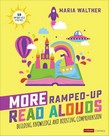
Unlock the transformative potential of read-aloud to joyfully strengthen essential literacy skills. In this eagerly anticipated follow-up to Maria Walther's The Ramped-Up Read Aloud, discover 50 MORE read-aloud experiences designed to bolster students' literacy development, ignite imagination, and enhance motivation. Backed by the latest research, this indispensable guide equips educators with the knowledge and tools to make read alouds a cornerstone of their teaching practice. More Ramped-Up Read Alouds includes lessons focused on foundational reading concepts like phonological awareness and decoding along with a new chapter on integrating literacy with STEAM. This must-have resource for K-5 teachers, librarians, schools, and districts goes beyond the basics. It empowers educators to elevate their read alouds, offering strategies to broaden students' content knowledge, expand vocabulary, and boost listening comprehension. Each read-aloud experience features: Standards-based learning targets Key vocabulary words with kid-friendly definitions Effective questioning techniques Innovative reading response ideas Targeted extension activities to enhance the experience for upper elementary learners Looking to create joyful, enriching reading experiences that will lead to endless possibilities? Search no further! It's time to make interactive read-aloud a non-negotiable part of the day-and watch learners soar!
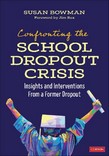
Reach out before they drop out Student dropout rates continue to soar, despite decades of funding, research, programs, and professional development initiatives. This is a wakeup call. Written by a former school dropout, Confronting the School Dropout Crisis encourages educators and related professionals to discover and explore the sometimes unnoticed reasons that youth drop out of school. With fresh strategies for prevention and intervention, this critical resource includes: How to reach and recover students who are at risk of dropping out or who already have Clear, impactful strategies that better engage and positively impact students who are at risk Moving personal stories from teens and the author Confronting the School Dropout Crisis invites you to rethink how you address real dropout issues with young people and how to incorporate fresh approaches to better reach and positively impact these students and their caregivers-before it's too late.
Coordination Strategies for Tough Student Situations
Uncover innovative and effective ways to confront challenging behavior Complicated and intense student behavior often requires coordinated and powerful support, but that support need not be overwhelming or difficult to implement. Success with the most challenging students requires a team approach. Optimistic Teaming is your ultimate guide to building and sustaining healthy interactions as teams working with challenging students. Drs. Ben Springer and Ben Belnap share humorous insights and critical strategies that help build successful school teams and rally those teams around your students. You'll discover how to: Remain optimistic and coordinate the best response to even the most aggressive student behaviors Identify the research and evidence base of leveraging optimism individually and in teams Use principles of positive psychology to produce successful outcomes for students and educators alike With this guide, you will discover the framework and strategies to not only remain optimistic, but make lasting, positive changes in the lives of students and their families.
Joyful and Affirming Language Lessons That Work for More Students
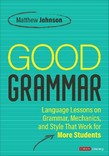
Modernize grammar instruction with language lessons that inspire and engage students! Grammar and language instruction has long been, in the words of Brock Haussamen in Grammar Alive!, "the skunk at the garden party of the language arts" that turns many eager learners into disengaged participants. This type of disengagement, and resulting student struggles, have long been the norm, not the exception, when it comes to grammar and language lessons. But why? Why does grammar-something so relevant and essential that we use it in the creation of every syllable we say, write, or think-often end up as one of the dullest and most disconnected parts of the ELA classroom? Good Grammar: Joyful and Affirming Language Lessons That Work for More Students seeks to answer that question and to offer practical, on-the-ground solutions for making grammar and language instruction more accessible, practical, and connected to students' reading, writing, and most importantly, the deep well of language knowledge they bring with them already. At the core of the book are six key practices for creating language instruction that comes across clearer, sticks better, transfers easier, and ultimately instills a love of language, all while teaching major grammatical concepts. Written by a practicing classroom teacher, this book offers Ready-to-go lessons and a recommended sequence Explanation of essential grammar and language concepts for teachers who need to refresh their own understanding of grammar and language topics and concepts Over a hundred modern, engaging, wide-ranging, and diverse mentor text examples Suggestions on how to introduce important linguistic concepts into secondary classes, including lessons about how language develops; how to define, examine, and celebrate dialects/familects/idiolects; and protocols for discussing concepts like code-meshing and "correctness" Examination of broader trends concerning what works and what doesn't work in regards to grammar and language instruction, with a goal of giving teachers the tools they need to create their own grammar and language curriculum that engages, inspires, and transfers more easily into student writing and life beyond the classroom walls. The title-Good Grammar-seeks to remind us that grammar doesn't have to be boring or feel punitive. Instead, it can be a force for good for more students, affirming who they are, honoring the language expertise they bring with them, and helping them to bring their unique voices to the page.