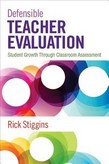
Meaningful teacher evaluation starts with visible student growth Annual standardized test scores cannot provide evidence of student growth needed to evaluate teacher performance. But consider student growth in the form of evidence derived from classroom assessment and you're on to something. For assessment expert Rick Stiggins, this can form the basis for a truly productive teacher evaluation strategy. This revolutionary book helps you bring classroom assessment to bear for real school improvement, with A plan for teacher evaluation based, in part, on dependable evidence of student growth Strategies for improving the assessment literacy of teachers and school leaders Five steps for developing and implementing productive local district assessment systems Practical tools that teachers and their evaluators can put to use immediately In this era of aggressive teacher evaluation reform, where teachers are charged with preparing ALL students to master 21st century proficiencies, the measurement of teacher success must start where learning happens-in the classroom. "Developing a fair, practical, and effective teacher evaluation system is like climbing a high mountain: it's impossible until someone finds a route. That's what Rick does in this book. He identifies the immense challenges associated with using evidence on student learning as the principal criteria in teacher evaluation and then offers practical guidance for overcoming those challenges. He hasn't made the climb easy, but he shows us the way." -Thomas R. Guskey, Professor of Educational Psychology University of Kentucky "Rick Stiggins builds a compelling case for the development of a solid foundation of assessment competence throughout our educational system." -Linda Darling-Hammond, Charles E. Ducommun Professor of Education Stanford University
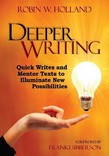
Quick Writes and Mentor Texts to Illuminate New Possibilities
Your best tool for building fluent writers Move beyond routine assignments and make your classroom's writing time really count! No extra time or effort required-this smart and compelling collection is designed to enhance the writing instruction you're already providing. More than just prompts, these texts will foster authentic writing every day, as you challenge your students to build fluency and write for a variety of purposes-top priorities of the Common Core. Whether you teach beginning writers or high school students, you can dive right in to 45 quick writes in an easy-to-use framework with suggested grade levels Carefully selected mentor texts that provide models and inspiration for student writing Guidelines for crafting your own original quick writes, tailored to your students' needs Deeper Writing gives you the tools and strategies you need to help your students' writing flourish, as they dig beneath the surface, remember and reflect and imagine, and learn to write with deeper meaning. "Here are the resources you would collect if you had months to search for them. Robin shows how each can be used to help students find satisfying topics and then develop those by studying the craft of other writers. This book will inspire you to write-and lead your students to write-with heart, with passion, and with increasing skill." -Penny Kittle, Author of Write Beside Them and Book Love
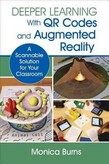
Discover how free, scannable technology can enrich learning and captivate students, including use of QR codes and Augmented Reality to promote hands-on learning, creativity, and critical thinking.
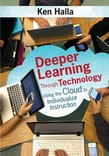
A teacher and top ed-blogger details techniques for leveraging cloud technology to create a self-paced, learner-centered classroom focusing on each student's unique learning pace, strengths, and interests.
7 Powerful Strategies for In-Depth and Longer-Lasting Learning
"I felt like I walked the walk and could implement many of the strategies after reading it once." -Andrea Golarz-Ziemba, Teacher O.P. Morton Elementary School, Hobart, IN "If our newest teachers came out of college with this knowledge, supplemented with the learning standards, their students would be more successful from day one." -Patti Larche, Director of Curriculum and Instruction Phelps-Clifton Springs CSD, NY Practical strategies to take your students' understanding from "So what?" to "Wow!" With the amount of content that teachers have to teach, how can we ensure that students gain a deep and lasting understanding of what they have learned? Based on the most current research on cognition and the brain, this exciting book for Grades 4-12 provides teachers with a systematic, reflective approach to incorporating powerful learning and content processing techniques into everyday instruction. Nationally recognized experts Eric Jensen and LeAnn Nickelsen outline the Deeper Learning Cycle (DELC), an instructional model that incorporates brain research, standards, and individual learning differences, to help educators teach for deeper understanding and critical thinking. This invaluable resource includes: In-depth chapters explaining the seven stages of the DELC: planning with standards and curriculum, pre-assessing, building a positive learning culture, priming and activating prior knowledge, acquiring new knowledge, processing the learning, and evaluating student learning A Deeper Learning lesson plan template to apply to daily instruction 50 strategies to differentiate instruction based on learning levels and to help students process content in meaningful ways Reflection questions to help teachers apply the material to their own practice Deeper Learning is a powerful tool to promote and support student progress beyond the surface level of understanding in any subject area.
7 Powerful Strategies for In-Depth and Longer-Lasting Learning
"I felt like I walked the walk and could implement many of the strategies after reading it once." -Andrea Golarz-Ziemba, Teacher O.P. Morton Elementary School, Hobart, IN "If our newest teachers came out of college with this knowledge, supplemented with the learning standards, their students would be more successful from day one." -Patti Larche, Director of Curriculum and Instruction Phelps-Clifton Springs CSD, NY Practical strategies to take your students' understanding from "So what?" to "Wow!" With the amount of content that teachers have to teach, how can we ensure that students gain a deep and lasting understanding of what they have learned? Based on the most current research on cognition and the brain, this exciting book provides teachers with a systematic, reflective approach to incorporating powerful learning and content processing techniques into everyday instruction. Nationally recognized experts Eric Jensen and LeAnn Nickelsen outline the Deeper Learning Cycle (DELC), an instructional model that incorporates brain research, standards, and individual learning differences, to help educators teach for deeper understanding and critical thinking. This invaluable resource includes: In-depth chapters explaining the seven stages of the DELC: planning with standards and curriculum, pre-assessing, building a positive learning culture, priming and activating prior knowledge, acquiring new knowledge, processing the learning, and evaluating student learning A Deeper Learning lesson plan template to apply to daily instruction 50 strategies to differentiate instruction based on learning levels and to help students process content in meaningful ways Reflection questions to help teachers apply the material to their own practice Deeper Learning is a powerful tool to promote and support student progress beyond the surface level of understanding in any subject area.
Making Equitable, Student-Centered, Sustainable Shifts
Employ the WHAT (deeper learning), the WHY (equity), and the HOW (learner-centered approaches) of Competency-Based Education, maximizing the time, place, and pace of student learning.
New Pedagogies for Deep Learning (NDPL) provides a comprehensive strategy for systemwide transformation. Using the 6 competencies of NDPL and a wealth of vivid examples, Fullan re-defines and re-examines what deep learning is and identifies the practical strategies for revolutionizing learning and leadership.
The goal of this book is to facilitate better communication between school counsellors and other mental-health professionals by enchancing counsellors' understanding of diagnostic codes and their use. W Paul Jones presents an overview of the basic ideas and terminology used in diagnosis, and examines specific conditions that school counsellors are likely to encounter.