The experiences of an educational organization that went through significant reform over a 13-year period are described in this book. The Kenmore-Tonawonda school district in the United States underwent changes in size, structure, leadership and skills to eventually become a nationally recognized school district of excellence.
The experiences of an educational organization that went through significant reform over a 13-year period are described in this book. The Kenmore-Tonawonda school district in the United States underwent changes in size, structure, leadership and skills to eventually become a nationally recognized school district of excellence.
One of the most immediate challenges in K-12 schools lies in implementing powerful pedagogy which emotionally, intellectually, and behaviorally engages students. The challenge is compounded in urban schools where higher proportions of underprepared minority students are in classrooms with teachers who find it difficult to not only create bonds but also in packaging pedagogy in relevant, interesting, and meaningful ways. Though many teachers can temporarily tap students' interests or episodically engage students in a portion of a lesson, the ability to create and sustain an engaging educational practice remains largely elusive. This book supplies the missing threads through establishing a framework for student engagement, which has been cited as the number one factor impacting achievement. It is an easy read, written a highly conversational tone with a strong research basis. You will explore a 7 step process for emotionally, intellectually, and behaviorally engaging students with a wealth of specific strategies, techniques, and tools which create an engaging educational experience. Utilizing cornerstones of professional learning communities, suggestions are offered for utilizing action research, collaborative inquiry, journal study, and shared practice to integrate ideas into practice.
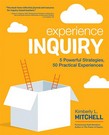
Plenty of resources speak to the benefits of inquiry, the research behind it, and even subject-specific processes to follow. But that's not enough. Implementing inquiry is the tricky part, and involves changing beliefs about the teacher and student roles in the classroom. The strategies and experiences in this book improve your relationships with students and colleagues, reduce your workload by asking more of students, and breathe joyful curiosity back into your classroom.
This volume provides a penetrating look at reform efforts that affirm equal opportunity yet at the same time continue to maintain structures that preserve inequity. Contributors examine ways to achieve greater educational equity and, through inquiry and exploration, offer several paths for thought and action.
Written in an entertaining, teacher-friendly, easy to read style with classroom examples, boxed features, and detailed sample lessons, the book covers checking for understanding, lesson objectives, activating prior knowledge, concept and skills development, guided practice, and much more.
In this teacher-friendly book, the authors offer a step-by-step guide to delivering effective lessons that can significantly improve achievement for English language learners.
Extending the Challenge in Mathematics is designed to help the general education mathematics teacher challenge his/her student(s) with mathematical promise. By providing math teachers with ready-to-use activities and the tools to create their own activities that will add depth to the standard curriculum, Extending the Challenge in Mathematics will ......
Communication and Conflict Resolution in the Schools
Among the greatest challenges faced by teachers and administrators are how to communicate effectively with students and how to resolve conflicts between them. Face to Face discusses the communication skills and conflict resolution principles necessary for the smooth functioning of schools and the effective teaching of students. The authors present a number of methods for improving teacher-student communication including: the use of reflective listening; open-ended questions; mediation programmes; problem-solving models; and interactive exchange. The book establishes a correlation between good communication skills and positive student outcomes, and offers practical tips that will help improve communication in the school.