The authors' overlay of high impact strategies with the seven strategies of assessment for learning acts as a guide for teachers and leaders to maintain focus for professional development and high impact classroom practices. The book also provides an updated set of examples that explain the seven strategies: clear learning targets and models of strong and weak student work (where am I going?); descriptive feedback and self-assessment and goal setting (where am I now?); and diagnosing learning needs and matching with high impact strategies, focused practice with feedback, and self-reflection and tracking progress (what are my next steps?). Finally, the book presents organizing structures based on the most recent aggregations of empirical evidence (Hattie, 2009; 2012) so that teachers and leaders can make informed choices for areas of emphasis and focus.
"Emphasizes the importance of matching instructional strategies to the appropriate outcomes.Thia is very important!" -Cindy Harrison, Educational Consultant "My peers would benefit from having this handbook to guide new and struggling teachers and to inspire the expert teacher on staff. Practical suggestions give educators incremental steps ......
"Emphasizes the importance of matching instructional strategies to the appropriate outcomes.Thia is very important!" -Cindy Harrison, Educational Consultant "My peers would benefit from having this handbook to guide new and struggling teachers and to inspire the expert teacher on staff. Practical suggestions give educators incremental steps ......
Realistic in demand and innovative in approach, this practical and powerful improvement process is designed to help all teachers get going, and keep going, with incremental professional improvement in schools.
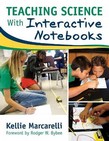
Teaching Science With Interactive Notebooks gives science teachers everything they need to incorporate interactive notebooks into classroom teaching and learning. All of the how-to is here for using notebooks to promote deeper student learning, critical and scientific thinking, and reinforcement of learning throughout the academic year. Kellie Marcarelli covers everything from rationale, procedures, organization, optimal use to propel student processing, thinking, learning, and metacognition, to how to explain the process to students and model it for them, to related classroom management, time management, assessment, and homework. A special segment on "accountable talk" also shows teachers how to develop the patterns of scientific discussion through classroom discourse that provide grounding for students' notebook entries. This book can enrich learning in any science classroom and supports the effort to make students the owners of their own learning. Interactive notebooks are natural differentiators that allow students to learn standards-based content and demonstrate that learning in individualized ways.
Good reading skills are taught by using the children's own language, structured phonics, begining readers, books, poems and songs. Writing, spelling, listening and speaking are emphasized because they are an integral part of the reading process. This book offers a balanced approach that combines a systematic phonics programme with whole language and may be used with begining readers or literature books.
A Framework for Improving Achievement in the Content Areas
This book provides assistance to teachers who struggle with the question of how to appropriately present complex subject matter to students who are just learning to speak English.
Practical, easy-to-implement methods for helping English language learners succeed in reading! In clear, accessible language, this resource demystifies the research about, and process for, teaching reading to English language learners (ELLs) and is an ideal guide for educators who may or may not have experienceain working with ELLs. The author introduces the key principles of reading instruction for ELLs and offers a wealth of action-oriented strategiesufor use before, during, and after readinguto adapt for individual student needs. Teachers will discover how to: Increase fluency and comprehensionTeach vocabulary and text structurePrepare reading lessonsAssess reading performance
Methods and Structures for Engaging, Explicit Instruction
Research-based, easy-to-use lesson structures for explicit and engaging teaching In Teaching Reading Across the Day, literacy expert Jennifer Serravallo provides nine effective, predictable, research-based lesson structures that help busy teachers save planning time and focus their teaching-and student attention-on content rather than procedures. Each of the nine lesson structures (read aloud, phonics and spelling, vocabulary, focus, shared reading, close reading, guided inquiry, reader's theater, and conversation) has its own chapter and features a wealth of resources that let you see the lessons in action in K-6 ELA, Science, and Social Studies classes, including: An annotated teaching vignette, lesson explanation, and research notes Tips for planning, structure and timing suggestions, and ideas for responsive teaching Detailed planning templates and 23 accompanying online videos covering over 3 hours of classroom footage Jen's reflections, key look-fors, and ideas for next steps The nine lesson structures can be used with any curriculum or core program, text, and subject, making it easier for teachers to maximize explicit and engaging teaching time across the day, and simplify planning and preparation. Jen incorporates a wide range of compelling research about how best to teach reading to every student in your class and translates the research (or the science of teaching reading) into high-leverage moves you can count on to deliver powerful lessons again and again. She also honors the art of teaching reading, helping teachers tap into their experience and hone their expertise to make quick, effective classroom decisions that take student learning to the next level.