Contact us on (02) 8445 2300
For all customer service and order enquiries

Woodslane Online Catalogues

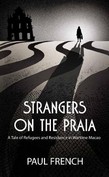
Strangers on the Praia

A Tale of Refugees and Resistance in Wartime Macao
Description
Author
Biography
Table of
Contents
Reviews
Google
Preview
Based on true stories and new research, Paul French weaves together the stories of those Jewish refugees who moved on from wartime Shanghai to seek a possible route to freedom via the Portuguese colony of Macao the Casablanca of the Orient. The delicately balanced neutral enclave became their wartime home, amid Nazi and Japanese spies, escaped Allied prisoners from Hong Kong, and displaced Chinese. Strangers on the Praia relates the story of one young womans struggle for freedom that would ultimately prove an act of brave resistance.
Paul French was born in London, educated there and in Glasgow, and lived and worked in Shanghai for many years. His book Midnight in Peking was a New York Times bestseller, a BBC Radio 4 Book of the Week, a Mystery Writers of America Edgar award winner for Best Fact Crime and a Crime Writers Association (UK) Dagger award for non-fiction. His book City of Devils: A Shanghai Noir has received much praise, with The Economist writing: in Mr French the city has its champion storyteller. Both Midnight in Peking and City of Devils are currently being developed for television. Stories from Destination Shanghai have been serialised on RTHK Radio 3. Strangers on the Praia is being developed for film.
Table of Contents: Introduction An Oriental Casablanca. Strangers on the Praia: Chapter 1 Macao: A Route to Freedom? Chapter 2 On From Shanghai. Chapter 3 There is no way out of Macao. Chapter 4 Free China. Macao and World War Two A Timeline. Further Reading: - On Macao. - On Kwangchowan. - On Jewish Shanghai in World War Two. Acknowledgments
Paul French's new book, Strangers on the Praia: A Tale of Refugees and Resistance in Wartime Macao, tells the little-known history of Jewish refugees in Shanghai that fled to the neutral Portuguese enclave. Featuring French's trademark research, and based on an amalgam of actual people, it might be characterized as "might have happened" history, albeit incomplete, as French admits. Yet so much in the book does seem complete, giving the reader a vivid idea of how some Jewish refugees left the relative safety of Shanghai for Macau in order to find better living conditions.--Susan Blumberg-Kason, author of Good Chinese Wife "Asian Review Of Books"
Google Preview content