Contact us on (02) 8445 2300
For all customer service and order enquiries

Woodslane Online Catalogues

9781603290104 Academic Inspection Copy

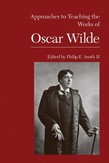
Approaches to Teaching the Works of Oscar Wilde

Description
Author
Biography
Reviews
Google
Preview
It is both a challenge and a pleasure to teach the works of Oscar Wilde, "the master of paradox," in the words of this volume's editor. Wilde wrote at a pivotal moment between the Victorian period and modernism, and his work is sometimes considered prescient of the postmodern age. He is now taught in a variety of university courses: in literature, theater, criticism, Irish studies, cultural studies, gender studies, and gay studies. This volume, like others in the MLA series Approaches to Teaching World Litereature, is divided into two parts. The first, "Materials," suggests editions, resources, and criticism, both in print and online, that may be useful for the teacher. The second part, "Approaches," contains twenty-five essays that discuss Wilde's stories, fairy tales, poetry, plays, essays, letters, and life-from the perspective of a wide range of disciplines.
Philip E. Smith II is associate professor of English at the University of Pittsburgh. With Michael S. Helfand he coauthored and coedited Oscar Wilde's Oxford Notebooks: A Portrait of Mind in the Making (1989). He has written on Wilde, Constance Naden, Robert Heinlein, Ursula Le Guin, Brian Aldiss, August Wilson, John Galsworthy, Charles Olson; on issues of curriculum, staffing, and teaching in the profession of English studies.
"Stimulating, original, and compact." --English Literature in Transition 1800-1920 "This is an exceptionally rich and comprehensive collection. Many will consult it for scholarly insights alone; those who read it for ideas on teaching Wilde will find a gold mine." --Julia Prewitt Brown, Boston University "This collection makes an important intervention not only into Oscar Wilde scholarship, but also into work on British nineteenth-century literature, theater, Irish, and gender studies. Wilde scholars and non-specialists alike will find it a useful guidebook for teaching the works of such a multifaceted figure (poet, playwright, essayist, celebrity) whose individual works often meld and remake genres."--Colin Carman, Colorado Mountain College
Google Preview content